The Parking Lot Pitmasters Who Prove the Best BBQ Never Needed a Building
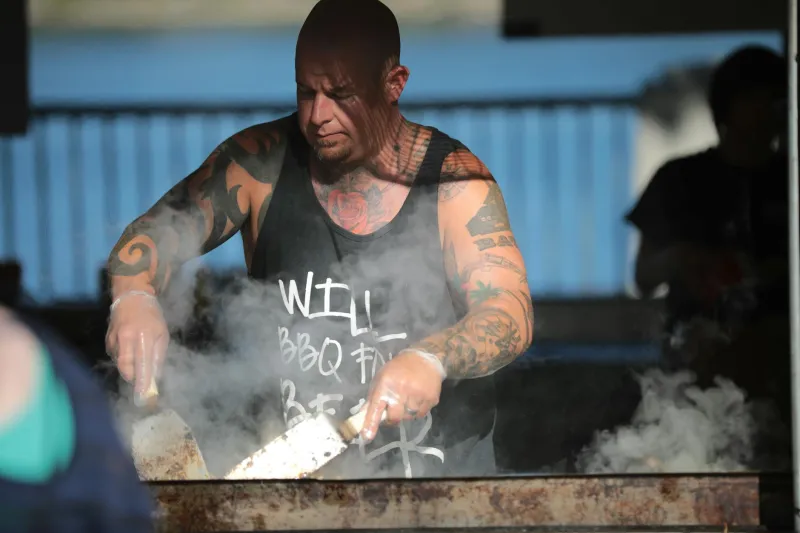
Every Saturday morning, Clarence Williams backs his custom-built trailer into the parking lot of Mount Olive Baptist Church in rural Mississippi. By 6 AM, smoke is billowing from his offset smoker, and by noon, people are driving from three counties away to buy his ribs. There's no sign, no website, no health department permit hanging on the wall. Just Clarence, his smoker, and a reputation built over 30 years of word-of-mouth recommendations.
Clarence represents a barbecue tradition that most food writers miss entirely: the world of parking lot pit masters, backyard legends, and weekend warriors who produce some of the most extraordinary smoked meat in America without ever wanting or needing a proper restaurant.
The Economics of Not Having Overhead
There's a reason why the best barbecue often comes from people operating out of trailers, church lots, and backyard setups. It's not just about keeping costs low — though that certainly helps. It's about freedom.
Clarence doesn't pay rent, utilities, or liability insurance. He doesn't need to worry about seating capacity, bathroom facilities, or staying open when business is slow. Instead, he can focus entirely on the only thing that matters: making perfect barbecue.
This model lets pit masters operate on their own terms. They cook when they want to cook, serve what they want to serve, and stop when they run out. If Clarence decides he wants to spend a weekend fishing instead of smoking ribs, that's exactly what he does. Try explaining that flexibility to a restaurant landlord.
Trust Built One Plate at a Time
What's remarkable about these operations is how they build and maintain their reputations. Without Yelp reviews, Instagram posts, or advertising budgets, they rely entirely on the oldest marketing system in the world: satisfied customers telling their friends.
This creates a different kind of relationship between pit master and customer. When your only advertising is word of mouth, every plate matters. You can't hide behind marketing or make up for mediocre food with slick presentation. The barbecue has to speak for itself.
Clarence knows most of his customers by name. He remembers who likes their ribs extra saucy, who always orders burnt ends, and whose grandmother used to make the best cornbread in the county. This isn't customer service training — it's genuine community connection.
The Art of Disappearing
Some of the most legendary barbecue operations are famous for their unpredictability. There's a pit master in East Texas who sets up on random street corners with no advance notice. The only way to find him is through a network of text messages and phone calls that spread through the community like wildfire.
Another operates out of his backyard in Kansas City, serving customers through a gate in his fence. He's open when he feels like it, closed when he doesn't, and produces ribs that food writers travel across the country to try. His "restaurant" is literally his back porch, complete with lawn chairs and a cooler full of cold drinks.
This invisibility isn't a bug — it's a feature. These pit masters aren't trying to build restaurant empires or franchise their operations. They're doing what they love, on their own terms, for people who appreciate what they do.
Why Mobile Means Better
There's something about cooking outdoors that changes the entire barbecue experience. Maybe it's the way smoke disperses in open air instead of being trapped by ventilation systems. Maybe it's the connection to traditional pit-cooking methods that predate indoor kitchens entirely.
Or maybe it's simply that people who choose to cook in parking lots and backyards are doing it for love, not money. They're not calculating food costs or optimizing profit margins. They're focused on the ancient art of turning tough cuts of meat into something transcendent through the application of smoke, time, and patience.
Clarence starts his fires at 4 AM not because he has to, but because that's what it takes to have ribs ready by noon. He tends his smoker for hours, adjusting airflow and adding wood based on instincts developed over decades. No restaurant owner would pay someone to provide that level of attention to detail, but Clarence does it because he can't imagine doing it any other way.
The Community Connection
What many people don't understand about these operations is that they're not really in the restaurant business at all. They're in the community business. The barbecue is just how they participate.
Mount Olive Baptist Church gets a small donation from Clarence's Saturday sales, which helps fund their community outreach programs. His customers aren't just buying lunch — they're supporting their neighbor's business and their church's mission. The parking lot becomes a weekly gathering place where people catch up on local news, share family updates, and maintain connections that go far deeper than food.
This social aspect of barbecue — the way it brings people together — is something that formal restaurants struggle to replicate. When you're eating ribs in a church parking lot, surrounded by people you've known for years, the food tastes different. Better.
What Restaurants Can't Replicate
The most successful barbecue restaurants try to capture the atmosphere of these informal operations. They install fake smokestacks, play blues music, and train their servers to call customers "honey" and "darlin'." But authenticity can't be manufactured.
The difference is that Clarence isn't performing authenticity — he's living it. His trailer isn't decorated to look rustic; it's actually weathered from years of use. His smoker isn't designed by restaurant consultants; it's built by a local welder according to Clarence's exact specifications. His recipes aren't developed by food scientists; they're refined through decades of cooking for people whose opinions actually matter to him.
The Future of Invisible Excellence
As food culture becomes increasingly dominated by social media and celebrity chefs, operations like Clarence's represent something increasingly rare: excellence that doesn't need recognition to survive.
These pit masters aren't trying to get featured in magazines or win barbecue competitions. They're not building brands or developing signature sauces for retail distribution. They're simply doing what they've always done: cooking great food for their communities.
In a world where restaurant success is often measured by online reviews and social media followers, the parking lot pit masters offer a different model entirely. They prove that the best barbecue — maybe the best food period — often comes from people who care more about their craft than their visibility.
Finding the Invisible Masters
If you want to find these operations, you can't just Google them. You have to ask around, pay attention to local conversations, and follow the smoke. Look for trailers in church parking lots, listen for recommendations from locals, and be prepared to drive down roads that don't show up on GPS.
Most importantly, understand that you're not just buying lunch — you're participating in a tradition that connects food to community in ways that formal restaurants rarely achieve. The barbecue might be the best you've ever tasted, but the real discovery is understanding why some of the most extraordinary food in America happens in the most ordinary places, made by people who never wanted to be famous for it.