Before Cheddar Took Over, Colonial Americans Were Aging a Tangy Cheese That Traded Like Cash
Before Cheddar Took Over, Colonial Americans Were Aging a Tangy Cheese That Traded Like Cash
Walk into any grocery store in America and the cheese section tells a pretty predictable story. Cheddar anchors one end, maybe a wedge of Swiss or pepper jack nearby, and somewhere in the middle, a block of something labeled "American." It's familiar. Comfortable. Completely unremarkable.
But here's what most people don't know: cheddar's stranglehold on American cheese culture is relatively recent. For the better part of two centuries before industrial dairy took over, colonial and early American farmsteads were producing something entirely different — a tangy, dense, crumbly wheel of aged cheese that locals simply called store cheese. And for a while, it was more valuable than money.
What Exactly Was Store Cheese?
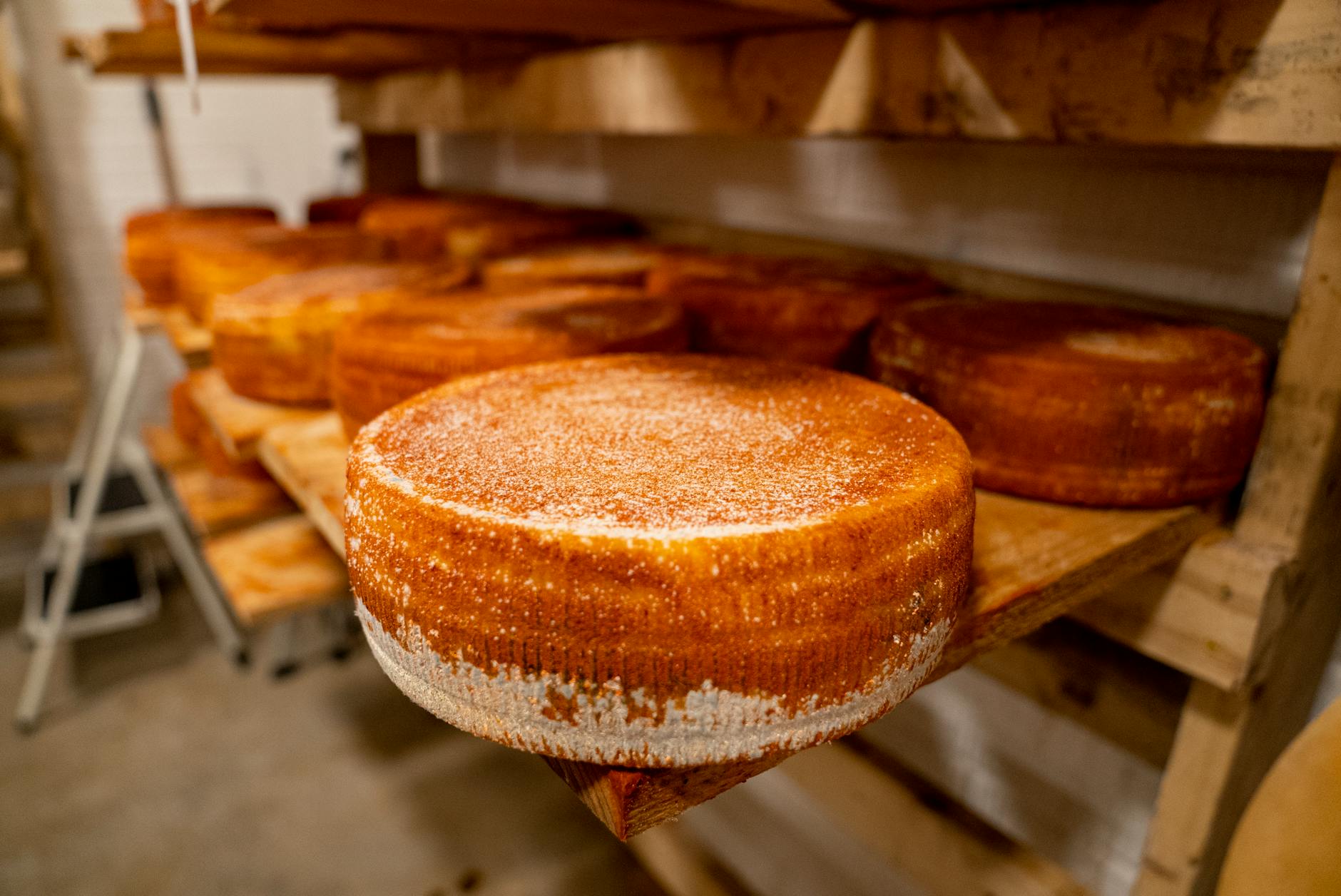
Store cheese wasn't a single recipe. It was a category — a style of aged farmhouse cheese made from whole or partially skimmed cow's milk, pressed into rounds, and left to cure anywhere from a few weeks to well over a year. The result was sharp, sometimes almost acidic, with a dry, crumbly texture that held up well through long winters and rough transport.
The name came from how it was sold. General stores throughout rural New England would stock wheels of the stuff behind the counter, slicing off portions for customers who'd often pay for goods using the cheese itself as a form of barter. A wheel of well-aged store cheese in 18th-century Massachusetts wasn't just food — it was a financial instrument. Farmers brought it in like coin.
Food historian Janet Vorwald Dohner, who has written extensively on heritage livestock and early American foodways, has noted that the cheese-making traditions of New England were sophisticated far beyond what most modern Americans assume. Farmwives weren't just winging it. They had developed specific techniques — particular rennet preparations, precise salting ratios, careful aging environments — that produced remarkably consistent results across generations.
How Industrialization Quietly Erased It
The unraveling started in the mid-1800s. In 1851, a farmer named Jesse Williams opened what's widely considered America's first cheese factory in Oneida County, New York. The idea was simple: pool milk from multiple farms, standardize the process, and scale up production. It worked. Factory cheese was cheaper, more consistent, and easier to ship.
By the time the Civil War ended, factory-produced cheddar — modeled partly on English styles but adapted for mass production — had begun crowding out the regional farmhouse varieties. Store cheese didn't disappear overnight, but the economics were brutal. Why age a wheel in your cellar for eight months when a factory could sell you something cheaper by the block?
The final blow came in the early 20th century, when pasteurization requirements and industrial dairy consolidation made small-batch farmhouse production financially unviable for most rural families. The knowledge didn't vanish entirely — it survived in handwritten recipe books, in oral traditions passed between farm women, in the occasional stubborn holdout who kept making cheese the old way. But as a living, practiced tradition, store cheese had essentially gone underground.
The Science Behind Why It Tasted Different
Here's something that makes this more than just a nostalgia story: store cheese wasn't just different by tradition. It was chemically distinct in ways that actually mattered to flavor.
Farmhouse cheeses made from raw, unpasteurized milk contain a complex ecosystem of native bacteria and enzymes that factory pasteurization eliminates entirely. Those microbes interact with milk proteins and fats during aging, producing flavor compounds — particularly short-chain fatty acids and various esters — that simply don't develop the same way in pasteurized cheese. The result is a depth of flavor that cheesemakers sometimes describe as "alive" compared to its industrial counterpart.
The aging environments mattered too. Stone cellars and wooden shelving introduced ambient molds and humidity variations that contributed to each wheel's unique character. No two were identical, which was exactly the point. That inconsistency, which made factory owners nervous, was what made farmhouse cheese genuinely interesting to eat.
A Quiet Revival With Deep Roots
Something has been shifting in small pockets of New England and upstate New York over the past decade or so. A handful of small-scale cheesemakers — some of them trained in European traditions, others digging through historical records and agricultural society archives — have started producing cheeses that deliberately echo the store cheese tradition.
Creameries like Jasper Hill Farm in Vermont and smaller operations in Massachusetts and Connecticut have been experimenting with raw-milk aged wheels that draw directly on pre-industrial American methods. They're not marketing them as "store cheese" necessarily, but the lineage is unmistakable: dense, sharp, crumbly, with that acidic bite that was once as common in American kitchens as salt pork.
The interest isn't purely nostalgic. Chefs at farm-to-table restaurants have started seeking these cheeses out specifically because they pair differently than cheddar — more assertive, more complex, better suited to dishes that need the cheese to hold its own against bold flavors.
Why This Actually Matters Right Now
There's something almost poetic about store cheese making a comeback at a moment when Americans are increasingly skeptical of processed food and interested in knowing where their ingredients come from. The farmhouse cheese tradition was, at its core, a hyper-local food system. The milk came from the farm next door. The aging happened in a cellar dug into the same hillside. The cheese ended up in the hands of neighbors who knew exactly who made it.
That kind of transparency — which feels very 2024 in its values — was just ordinary life in 1790.
Next time you're at a farmers market and spot a small producer selling aged raw-milk wheels, it might be worth asking what tradition they're drawing on. You could be holding something with a lineage that goes back further than the country itself — a bite of American history that almost didn't survive.