When Harvest Time Meant Community Time
Long before Pinterest boards celebrated farm-to-table dining and food waste reduction, rural Midwestern communities had already perfected both concepts through an ingenious system that modern food historians have almost entirely overlooked. These farming towns organized massive communal meals around enormous cast-iron kettles, creating a waste-nothing food culture that fed entire communities while strengthening social bonds in ways our individualistic food system struggles to replicate.
The tradition emerged from pure necessity. When harvest season arrived, farm families faced the same challenge: abundance followed by potential waste. Corn, beans, squash, and root vegetables all ripened simultaneously, creating more fresh produce than any single family could preserve or consume. Rather than let surplus spoil, these communities developed an elegant solution that transformed individual abundance into collective nourishment.
The Anatomy of a Community Kettle
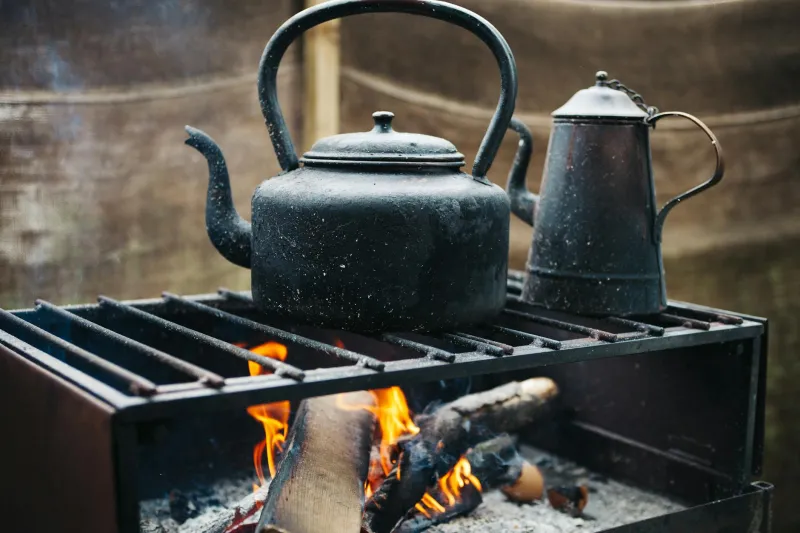
The centerpiece of these gatherings was always the kettle itself — a massive cast-iron vessel that could hold 20 to 40 gallons of food. These weren't standard kitchen equipment; they were community investments, often purchased collectively and stored in church basements, grange halls, or schoolhouses between uses.
The cooking process began days before the actual meal. Families would arrive with whatever surplus their harvest had produced: bushel baskets of corn, sacks of beans, wheelbarrows full of squash, bundles of herbs, and cuts of meat from recent butchering. The beauty of the system lay in its flexibility — the recipe changed based on what each family could contribute, creating unique flavor combinations that reflected the specific agricultural character of that year's harvest.
More Than Just a Big Stew
While outsiders might dismiss these meals as simple stews, the reality was far more sophisticated. Community cooks developed complex layering techniques, adding ingredients in carefully timed sequences to maximize flavor development. Root vegetables went in first, followed by grains and legumes, then seasonal vegetables, and finally fresh herbs and dairy products.
The cooking process itself became a social event. Women rotated stirring duties, sharing gossip and comparing preservation techniques. Men maintained the fire, debating everything from crop rotation to local politics. Children played elaborate games around the cooking area, creating memories that would last lifetimes.
These weren't hasty affairs. The best community kettle meals simmered for 8-12 hours, allowing flavors to develop complexity that impressed even sophisticated urban visitors. Travelers' journals from the era frequently mention the surprising quality of these rural communal meals, noting flavor profiles that rivaled restaurant dining in major cities.
The Economics of Shared Abundance
The community kettle system solved multiple economic challenges simultaneously. Families could contribute whatever they had in surplus, meaning participation didn't require equal financial investment. A family with abundant corn but little meat could trade their surplus for protein from neighbors who had recently butchered livestock.
This informal barter system extended beyond the immediate meal. Families often left these gatherings with preserved foods, seeds for next year's planting, or promises of future labor exchange. The kettle meal became the centerpiece of a broader economic ecosystem that helped rural communities weather the boom-and-bust cycles of agricultural life.
Regional Variations and Secret Techniques
Like many folk traditions, community kettle cooking developed distinct regional characteristics. Wisconsin communities often featured dairy-heavy versions, incorporating fresh cheese and cream. Minnesota gatherings showcased wild rice and foraged mushrooms. Kansas meals highlighted wheat-based dumplings and prairie herbs.
Some communities developed signature techniques that became sources of local pride. The "Iowa layering method" involved creating distinct flavor zones within the same kettle, allowing families to sample different taste combinations from the same pot. Nebraska cooks perfected a smoking technique that used corncobs to add subtle flavor complexity.
Why Food Historians Missed This Story
The invisibility of community kettle cooking in standard food histories reflects broader biases in how we document culinary culture. These meals left few written records — no formal recipes, no restaurant reviews, no cookbook entries. The knowledge was transmitted orally and experientially, making it nearly invisible to researchers who rely on written sources.
Additionally, food historians have traditionally focused on urban dining culture and commercial food production, overlooking rural communal traditions that operated outside market systems. The community kettle tradition challenges narratives about American individualism and commercial food innovation, suggesting alternative models of food culture that don't fit neat historical categories.
The Slow Disappearance
Several factors contributed to the decline of community kettle cooking. Improved transportation allowed rural families to access commercial food sources year-round, reducing dependence on local harvest surplus. The rise of home preservation technology — canning equipment, refrigeration, freezers — gave individual families more options for managing abundance.
Urbanization played a role too. As young people left farms for city jobs, rural communities lost the critical mass needed to organize large communal meals. The social networks that supported the tradition gradually weakened, making coordination more difficult.
Modern Echoes and Lessons
Today's farm-to-table movement and community-supported agriculture programs echo principles that community kettle cooking perfected over a century ago. The emphasis on seasonal eating, waste reduction, and local food systems reflects the same values that drove these forgotten traditions.
Some contemporary food initiatives consciously draw inspiration from community kettle principles. Community kitchens in Detroit use similar large-batch cooking methods to address food insecurity. Permaculture communities organize harvest festivals that mirror the social and economic functions of historical kettle meals.
Reviving the Community Table
The story of community kettle cooking offers practical lessons for modern food challenges. In an era of food waste, social isolation, and industrial agriculture, these forgotten traditions suggest alternative approaches that address multiple problems simultaneously.
Perhaps most importantly, community kettle cooking reminds us that food culture is ultimately about more than nutrition or flavor — it's about the social bonds that form around shared meals and collective effort. In our increasingly individualistic food system, these forgotten traditions offer a glimpse of what we've lost and what we might yet recover.