The Train Stop Diners That Taught America How to Eat Fast — 50 Years Before the Golden Arches
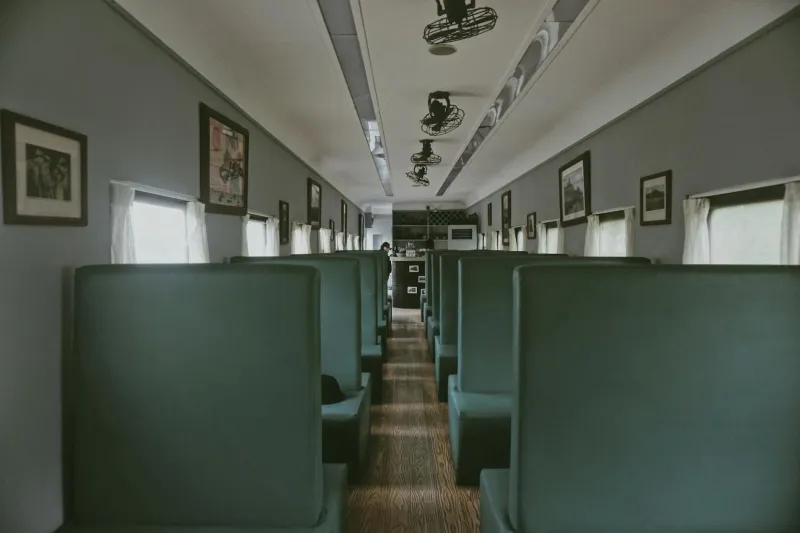
Picture this: It's 1885, and you're riding the Santa Fe Railroad across the dusty expanse of Kansas. Your stomach is growling, but there's no drive-through window in sight — because cars haven't been invented yet. Instead, the train pulls into a small depot, and you have exactly 30 minutes to grab a hot, freshly prepared meal before the whistle blows again.
Welcome to the Harvey House, the forgotten dining revolution that taught America how to eat fast — decades before anyone had ever heard of McDonald's.
The Man Who Fed the West
Fred Harvey didn't set out to revolutionize American dining. He just wanted a decent meal while traveling for his mail-order business. Frustrated by the greasy, overpriced slop served at most railroad stops, Harvey struck a deal with the Santa Fe Railroad in 1876: he'd run clean, efficient restaurants at their depots in exchange for prime real estate and guaranteed train stops.
What happened next was nothing short of a dining revolution. Harvey's lunch counters didn't just serve food — they served it with military precision. Every Harvey House operated on identical standards: white tablecloths, heavy silverware, and meals that arrived within minutes of ordering. The secret? A communication system that would make modern fast food chains jealous.
The Original Fast Food Formula
Here's where it gets fascinating: Harvey Houses pioneered nearly every trick that modern fast food chains use today, but they did it with actual china and real silverware.
First, the menu was standardized across all locations. Whether you stopped in Dodge City, Kansas, or Flagstaff, Arizona, you'd find the same dishes prepared the same way. Portion sizes were identical, prices were fixed, and quality was guaranteed.
But the real genius was in the timing. Train conductors would wire ahead to announce how many passengers wanted meals. By the time the train arrived, Harvey Girls (the famous waitresses) had already set the tables and started cooking. Passengers could order, eat a full meal, and reboard their train in under 30 minutes.
Sound familiar? That's because Harvey essentially invented the fast food model that McDonald's would later perfect with drive-throughs and assembly-line cooking.
The Women Who Made It Work
The Harvey Girls weren't just waitresses — they were the backbone of an empire. Harvey recruited young, unmarried women from back East, offering them steady wages, room and board, and a chance at adventure in the Wild West. These women had to meet strict standards: they couldn't marry for a year, had to live in company housing, and were expected to maintain impeccable appearance and behavior.
In return, they earned more than most men in their hometowns and gained a level of independence that was revolutionary for the 1880s. Many Harvey Girls eventually married and settled in the West, helping to populate entire towns. Some historians estimate that Harvey Girls were responsible for civilizing more of the American frontier than any other single factor.
Innovation Hiding in Plain Sight
What's remarkable is how many modern restaurant practices Harvey Houses quietly pioneered. They used standardized recipes and portion controls. They implemented quality assurance programs and customer service training. They even developed supply chain management systems to ensure fresh ingredients reached remote locations.
Harvey Houses also understood something that wouldn't become common knowledge until decades later: presentation matters. While other railroad stops served beans from tin cans, Harvey Houses plated everything on real china with cloth napkins. They proved that Americans would pay more for food that looked and felt special, even if they only had 30 minutes to eat it.
The Empire That Trains Built
At its peak, the Harvey Company operated over 100 restaurants, hotels, and dining cars across the Southwest. They served millions of meals annually and employed thousands of people. For nearly 80 years, Harvey Houses were synonymous with quality dining in the American West.
But like many great American institutions, Harvey Houses fell victim to changing times. The rise of automobile travel in the 1950s meant fewer people rode trains, and roadside diners began popping up along new interstate highways. The last Harvey House closed in 1991, ending a chapter of American dining history that most people had already forgotten.
What We Lost When the Trains Stopped
Today, when we think about fast food, we picture drive-through windows and paper wrappers. But Harvey Houses proved that speed and quality didn't have to be mutually exclusive. They showed that standardization could coexist with hospitality, and that feeding people quickly could still be a dignified profession.
More importantly, Harvey Houses understood something that modern fast food has largely forgotten: eating should feel like an event, even when you're in a hurry. Those white tablecloths and heavy silverware weren't just about appearances — they were about treating customers like their time and money mattered.
The next time you're rushing through a drive-through, remember the Harvey Girls who could serve a full meal with real plates and actual silverware in the same amount of time. They proved that fast food didn't have to mean cheap food — it just took someone willing to reimagine what was possible.