The Midnight Meal Revolution Nobody Remembers
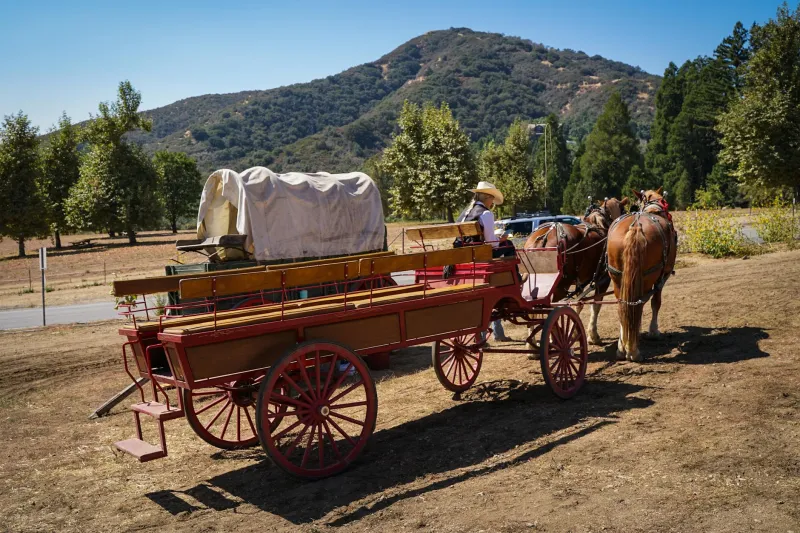
Walk through any American city today and you'll find food trucks parked on corners, their colorful awnings promising everything from Korean BBQ to artisanal grilled cheese. But this mobile food revolution didn't start with hipster entrepreneurs or Instagram-worthy tacos. It began in the smoky industrial districts of the 1880s, where horse-drawn lunch wagons clattered through the darkness, serving hot coffee and hearty sandwiches to night-shift workers who had nowhere else to turn.
These weren't the quaint diners we romanticize today. They were rolling lifelines for America's growing army of industrial workers — immigrants, factory hands, and railroad crews who kept the country running while everyone else slept.
When Night Shifts Created a Food Desert
As America industrialized in the late 1800s, factories began running around the clock. Suddenly, thousands of workers found themselves clocking in at 11 PM or midnight, facing eight to twelve hours of labor with no way to get a hot meal. Restaurants closed at sunset. Saloons served liquor, not lunch. The few boarding houses that offered meals catered to day workers.
This created what we'd now call a food desert, but one defined by time rather than geography. Night workers survived on cold leftovers from home, stale bread, or nothing at all. The problem was particularly acute for recent immigrants who lived in crowded tenements without proper kitchens.
Enter the lunch wagon entrepreneurs — often immigrants themselves — who saw opportunity where others saw only darkness.
Rolling Restaurants Built for the Forgotten Shift
The first lunch wagons were simple affairs: modified horse-drawn carts with small stoves, coffee urns, and space for maybe a dozen customers to stand and eat. But their operators quickly learned what night workers needed most.
Unlike daytime restaurants that could rely on leisurely diners, lunch wagons had to serve fast, filling food to workers on short breaks. They specialized in what we'd now call comfort food: thick sandwiches, hearty stews, strong coffee, and simple desserts. Everything was designed to be eaten quickly, often while standing.
The wagons followed predictable routes, appearing at factory gates during shift changes and break times. Workers knew exactly when "their" wagon would arrive — and wagon operators knew their regular customers by name, remembering who liked extra mustard or took their coffee black.
The Social Hub on Wheels
What food historians are only now recognizing is how these wagons functioned as more than just restaurants. In an era when night workers were largely invisible to mainstream society, the lunch wagon became a social center.
For immigrant workers, the wagons often served familiar foods from home — Polish sausages, Italian sandwiches, German-style stews. They became places where workers could speak their native languages, share news from the old country, and maintain cultural connections that daytime America often tried to erase.
The wagons also served as informal employment networks. Job openings, union meetings, and community news all traveled through the midnight food circuit. Some wagon operators became trusted figures in working-class neighborhoods, extending credit during hard times or helping workers send money back to families overseas.
Why the Lunch Wagon Story Got Lost
Despite their importance to working-class life, lunch wagons left few historical traces. They weren't regulated like restaurants, didn't advertise in newspapers, and served customers who rarely wrote memoirs or kept detailed records.
When diners began appearing in the early 1900s — often as stationary versions of lunch wagons — the mobile food tradition was quickly forgotten. Food historians focused on the more visible, middle-class dining culture while ignoring the parallel food system that served industrial America.
Even the terminology worked against them. "Lunch wagon" sounds quaint and temporary, while "diner" suggests permanence and respectability. The horse-drawn wagons were literally pushed out of food history by their stationary descendants.
The DNA of Modern Food Trucks
Look closely at today's food truck culture and you'll see the lunch wagon DNA everywhere. The focus on quick, handheld food. The regular routes and loyal customers. The way food trucks cluster around office buildings during lunch breaks or appear at construction sites.
Even the social media aspect has parallels — food trucks use Twitter and Instagram the same way lunch wagon operators used word-of-mouth networks to let customers know where they'd be and when.
Lessons From the Midnight Circuit
The lunch wagon story offers more than just historical curiosity. It shows how food entrepreneurs have always found ways to serve underserved communities, often creating entirely new food cultures in the process.
These wagon operators didn't just fill a market gap — they created the template for mobile food service that we're still using today. They proved that good food doesn't need white tablecloths or permanent addresses, just someone willing to show up where hungry people gather.
In our current era of food trucks and pop-up restaurants, maybe it's time to remember the horse-drawn kitchens that started it all, rolling through the darkness to feed the workers who built modern America.