The Rice Triangle That Quietly Rewrote the Rules of How We Think About Fast Food
The Rice Triangle That Quietly Rewrote the Rules of How We Think About Fast Food
Picture the worst meal you've ever eaten on the go. Maybe it was a gas station hot dog rotating under a heat lamp since Tuesday. Maybe it was a sad desk sandwich in a plastic clamshell that had been sitting in a refrigerated case since before you woke up. Whatever it was, it probably felt like a defeat — a concession to the chaos of a busy day.
Now imagine a parallel universe where grabbing a quick, cheap meal from a convenience store is actually... a pleasure. Where the food is fresh, intentional, and connected to a culinary tradition stretching back hundreds of years. Where the person who stocked that shelf thought carefully about texture, balance, and the quiet dignity of a meal eaten on the move.
That universe exists. It's called Japan. And the unassuming star of the whole thing is a rice triangle most Americans have never tried.
What an Onigiri Actually Is (And Why the Description Doesn't Do It Justice)
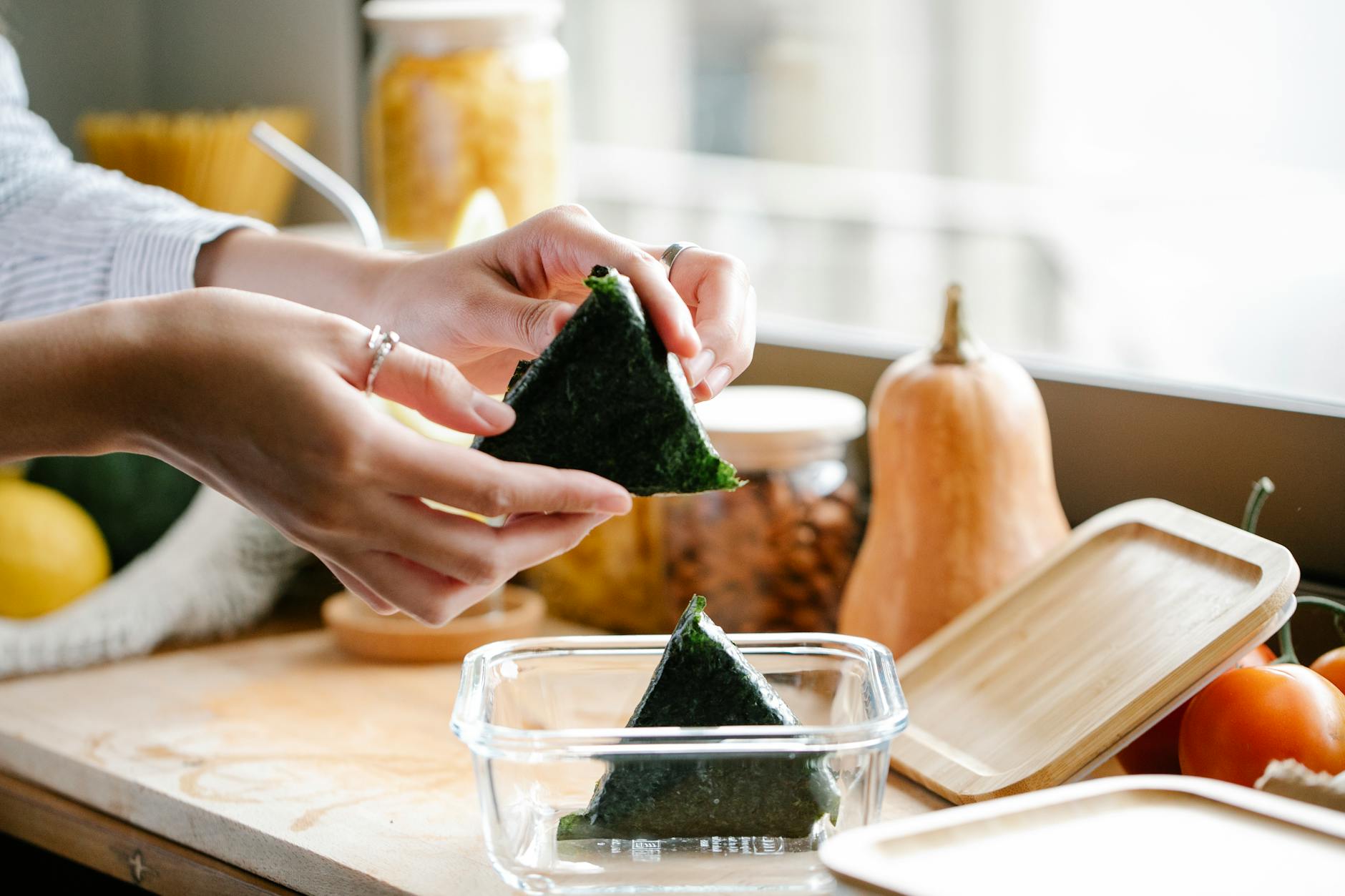
On paper, onigiri sounds almost too simple to be interesting: cooked rice, shaped by hand into a triangle or cylinder, usually wrapped in a sheet of nori seaweed, often with a small filling tucked inside. Pickled plum. Grilled salmon. Seasoned tuna. Kombu kelp. Cod roe.
But describing an onigiri by its ingredients is like describing a great song by listing the notes. The whole point is the craft — the specific firmness of the rice, pressed just tightly enough to hold together without becoming dense. The contrast between the warm, slightly sticky rice and the dry, papery crunch of the seaweed. The way the filling sits at the center like a small surprise, calibrated in size so every bite has a little of everything.
Japanese convenience store chains like 7-Eleven, Lawson, and FamilyMart have turned this into a near-science. Their onigiri are engineered for freshness, packaged in a clever three-step wrapper that keeps the nori crispy until the moment you open it. New flavors rotate seasonally. Regional variations exist across different parts of the country. Entire devoted fan bases track limited-edition releases the way Americans follow sneaker drops.
This is not gas station food. This is a system.
The History Behind the Triangle
Onigiri didn't start in a convenience store. The earliest written references to rice balls in Japan date back over a thousand years, and some food historians believe the practice of shaping cooked rice by hand is even older — a way of making portable, preserved food for travelers, soldiers, and farmers long before refrigeration existed.
Salt, the original preservative, was rubbed onto the hands before shaping, which both seasoned the rice and helped keep it from spoiling. The nori wrapper served a similar practical function — protecting the rice from the air and making it easier to hold without utensils. Every element of the design solved a real problem.
What's remarkable is how little the core concept has changed. The onigiri you buy at a Tokyo convenience store at 2 a.m. is recognizably descended from the rice ball a Japanese farmer packed for a long day in the fields eight centuries ago. That kind of continuity is almost unheard of in food culture, and it gives even the most mass-produced version a quiet depth that's hard to explain to someone who hasn't experienced it.
Why the Concept Never Fully Landed in the US
American convenience store culture and Japanese convenience store culture share almost nothing except the name. In the US, the convenience store evolved primarily as an extension of the gas station — a place to grab cigarettes, lottery tickets, and a fountain drink, not a destination for a considered meal.
When Japanese convenience store chains have attempted US expansions, or when American chains have experimented with onigiri-style products, the results have been underwhelming. Part of the problem is infrastructure: the fresh food supply chains that make Japanese konbini food work require a level of daily restocking and quality control that most American convenience retailers aren't built for.
But there's also a cultural gap that's harder to bridge. American fast food culture is built around abundance — bigger portions, bolder flavors, maximum customization. Onigiri is the opposite of all that. It's restrained. Precise. It asks you to appreciate subtlety, and subtlety is a tough sell at a checkout counter next to a rack of beef jerky.
The Underground Onigiri Movement Changing the Conversation
Here's the part worth paying attention to: a small but growing number of independent food vendors across the US are doing something interesting. They're not trying to replicate the convenience store experience. Instead, they're treating onigiri as what it actually is — a serious, craft food product — and selling it through farmers markets, pop-up stalls, and small dedicated shops.
In cities like Los Angeles, New York, and Seattle, onigiri-focused spots have started building loyal followings among customers who've either traveled to Japan or grown up eating them at home. These vendors experiment with American-influenced fillings — pulled pork, smoked salmon, roasted sweet potato — while preserving the structural integrity and philosophy of the original.
What they're really selling, whether they'd describe it this way or not, is a different idea about what a quick meal can be. Not a compromise. Not fuel. Something worth pausing over, even if just for five minutes.
That idea has been hiding in plain sight for a thousand years. It just took a rice triangle to make Americans notice.