Medieval Bakers Cracked the Sourdough Code Centuries Ago — And We've Been Relearning It Ever Since
Medieval Bakers Cracked the Sourdough Code Centuries Ago — And We've Been Relearning It Ever Since
During the pandemic sourdough craze, millions of Americans killed their starters, produced bricks instead of loaves, and posted increasingly defeated photos of flat, dense bread to social media. It became a cultural joke — a symbol of ambitious quarantine projects gone sideways. What almost nobody knew was that bakers in 13th-century France, Germany, and England had already solved most of those problems. Without thermometers. Without kitchen scales. Without a single YouTube tutorial.
The Communal Starter: A Living Heirloom
Here's something that tends to genuinely surprise people: in medieval European villages, a sourdough starter wasn't a personal possession. It was a communal resource, often kept at the village bakehouse and maintained across generations — sometimes for decades without interruption.
This wasn't sentimentality. It was practical genius. A mature starter, one that has been fed and maintained over years, develops a dramatically more complex and stable microbial ecosystem than anything you can spin up in a week. The diversity of wild yeasts and bacteria in a long-running culture makes it more resilient to temperature swings, more forgiving of irregular feeding schedules, and more consistent in its leavening power.
Food microbiologist Dr. Marco Gobbetti, whose research on sourdough fermentation at the Free University of Bozen-Bolzano has been widely cited in the field, has documented how the specific bacterial strains in long-maintained starters — particularly Lactobacillus sanfranciscensis (now reclassified as Fructilactobacillus sanfranciscensis) — produce flavor compounds and organic acids that simply cannot develop in a young culture. The medieval bakers didn't know the Latin names. But they knew that old starter made better bread, and they protected it accordingly.
They Understood Temperature Without a Single Thermometer
One of the most common mistakes modern sourdough bakers make is treating their starter and dough like they exist in a temperature vacuum. Pop it on the counter, walk away, check back in four hours. The result is wildly inconsistent — because ambient kitchen temperature swings by 10 or 15 degrees throughout the day, and those swings matter enormously to fermentation timing.
Medieval bakers had none of our measurement tools, and yet historical records and guild documentation from across Europe describe practices that reveal a sophisticated intuitive grasp of thermal management. Bakers in colder northern climates nestled their proving doughs near — but not directly beside — the oven. Bakers in warmer Mediterranean regions used ceramic vessels partially buried in cool earth to slow overnight fermentation. English guild records from the 14th century describe the practice of testing dough temperature by pressing a forearm against it, a method that, while imprecise by modern standards, is actually a reasonable proxy for catching gross temperature errors.
What they were doing, without articulating it scientifically, was managing the competition between yeast activity (which favors warmer temperatures) and lactic acid bacteria activity (which can dominate in cooler, slower ferments and produces that characteristic sour depth). Modern food science has confirmed that this balance is exactly what separates mediocre sourdough from exceptional sourdough. The medieval bakers were running the right experiment. They just didn't have the vocabulary to describe why it worked.
Humidity, Crust, and the Steam Trick We Forgot
Another place where medieval technique quietly outpaces a lot of modern home baking is steam management during baking. Today, the advice to bake sourdough in a covered Dutch oven — trapping steam in the early phase of baking to allow maximum oven spring before the crust sets — is treated like a relatively recent discovery, popularized by baking writers like Chad Robertson in the 2010s.
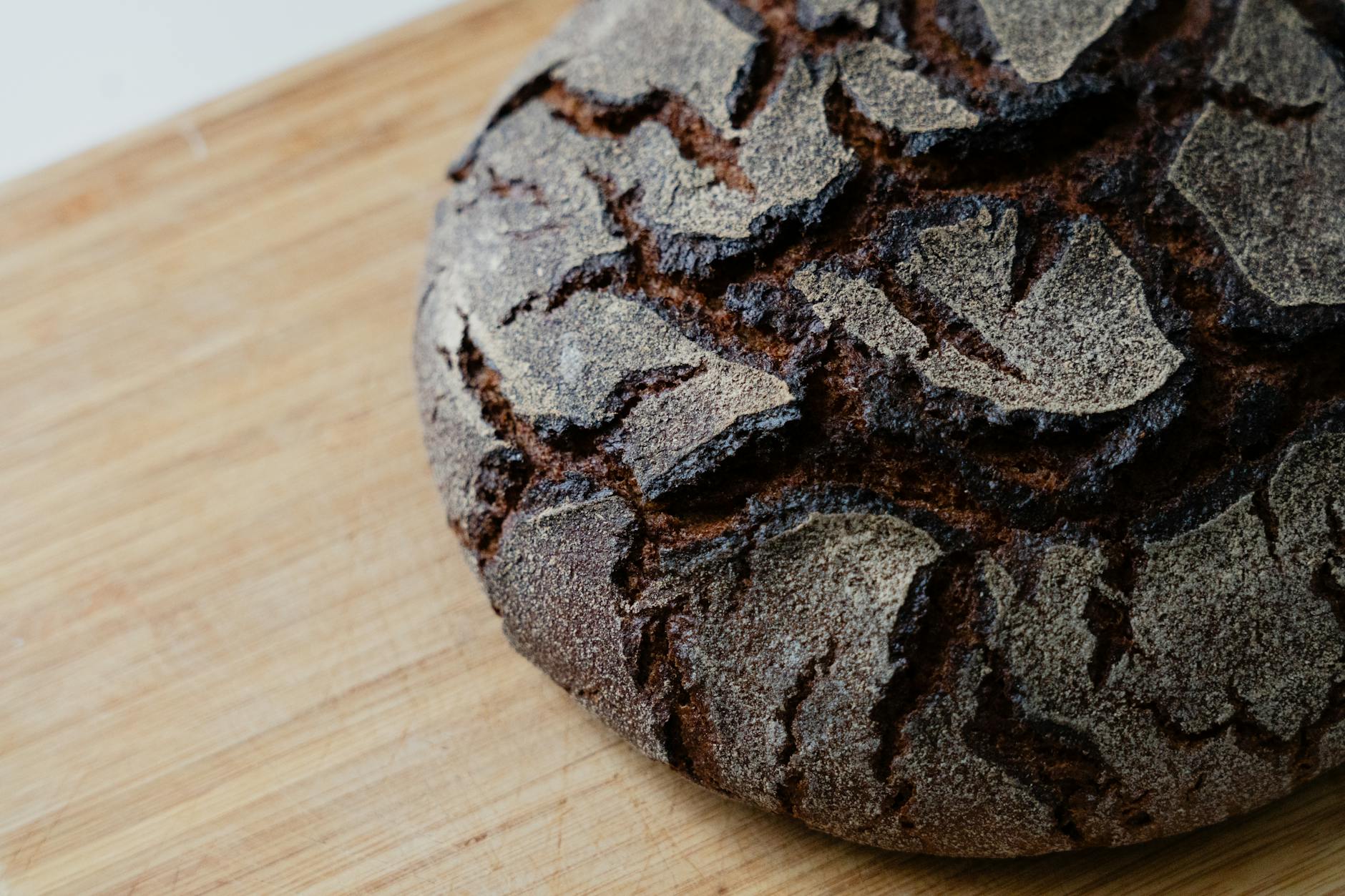
But historical accounts of European communal wood-fired ovens describe bakers throwing water or wet cloth against the oven walls immediately before loading loaves — a practice that served the exact same function. The steam delayed crust formation, allowed the loaf to expand fully, and produced the crackly, deeply colored exterior that distinguishes a great sourdough from a pale, tight-crumbed disappointment.
This wasn't written down in a recipe. It was passed from master baker to apprentice as embodied knowledge, the kind of thing you learn by watching and doing, not by reading. When industrial bread production centralized and deskilled baking in the late 19th and early 20th centuries, that embodied knowledge simply evaporated.
What You Can Actually Use Right Now
The genuinely useful takeaway here isn't just historical admiration — it's practical.
If your starter feels inconsistent, consider keeping it somewhere with more stable temperatures rather than your kitchen counter. A cooler, a proofing box, or even a turned-off oven with just the light on can dramatically stabilize fermentation behavior.
If your loaves taste flat and yeasty rather than complex and tangy, the problem is almost certainly a young or under-maintained starter. Feed it more regularly for two weeks and pay attention to what it smells like — a well-balanced starter should have a pleasant, yogurt-like tang, not a sharp alcohol smell.
And if you're not covering your loaf for the first 20 minutes of baking, start. The medieval bakers figured that one out before your great-great-grandmother was born.
They didn't have the science. But they had something arguably more valuable — centuries of accumulated, carefully observed experience. We're just now catching up.