Indigenous Food Science Figured Out Long-Term Meat Preservation Centuries Before the Army Did
The Most Calorie-Dense Food in History Was Invented Long Before Anyone Was Counting Calories
In the winter of 1804, Lewis and Clark's Corps of Discovery was camped along the Missouri River in present-day North Dakota, deep in a cold that would have been lethal without adequate provisions. Among the most important items in their supply cache was a dense, compact food they'd acquired from Indigenous traders: pemmican. It kept without refrigeration. It didn't spoil. It packed more energy per ounce than almost anything else available. And it had been perfected over centuries by the very people who understood this landscape better than any explorer ever would.
Pemmican is one of those foods that sits at the intersection of deep practical intelligence and sophisticated food science — and it developed entirely outside the European culinary tradition that most food history focuses on. The fact that it's not better known is its own kind of story.
What Pemmican Actually Is
At its most basic, pemmican is two things: dried lean meat and rendered fat, combined in roughly equal proportions by weight. That's it. But the simplicity is deceptive, because the specific way those two things are prepared and combined is what makes the final product so remarkable.
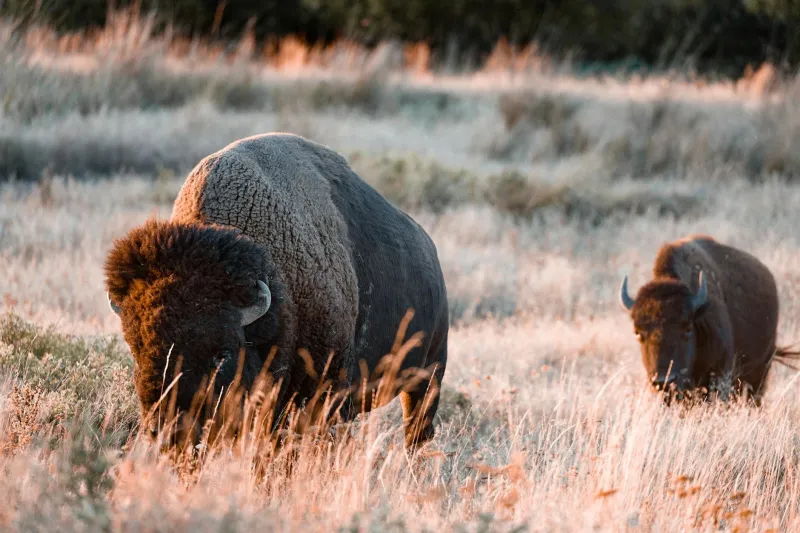
The meat — traditionally bison, though elk, deer, and moose were also used depending on region — was sliced thin and dried, either over low heat or in the open air, until it lost almost all its moisture. Once fully dried, it was pounded into a coarse powder or fine shreds. The fat, specifically the hard fat from around the kidneys (called suet or back fat), was rendered slowly until pure, then poured over the meat while still liquid. The mixture was packed tightly into rawhide pouches called parfleches and sealed.
Some groups added dried berries — saskatoon berries, chokecherries, or blueberries — which contributed carbohydrates, flavor, and likely some antimicrobial compounds. Bone marrow was sometimes incorporated for additional richness. Different Plains tribes had distinct regional variations, reflecting both local ingredients and specific preferences developed over generations.
The Food Science Behind Why It Works
Here's where things get genuinely fascinating, because what Indigenous makers had figured out empirically aligns almost perfectly with what food scientists now understand about preservation.
Spoilage requires moisture. Bacteria, mold, and the enzymatic processes that break down food all need water to operate. By removing virtually all moisture from the meat before combining it with fat, pemmican eliminates the conditions that allow spoilage to begin. The rendered fat then coats the dried meat particles and acts as a barrier, sealing out oxygen and further preventing microbial activity.
The fat itself matters enormously. Suet has a high melting point compared to other animal fats, which means it stays solid at room temperature and doesn't go rancid quickly. This wasn't an accident — Indigenous makers selected specific fat sources based on observed results, effectively solving the oxidation problem through accumulated trial and error across many generations.
The caloric density is extraordinary. A single pound of pemmican can contain upward of 3,500 calories — enough to sustain a person through a full day of heavy physical activity. For traveling, hunting, or surviving a northern winter, that density was not a luxury. It was a survival calculation.
How It Traveled Beyond the Plains
The Hudson's Bay Company and the North West Company, the two great fur-trading enterprises of North America, recognized pemmican's value early and built their entire western supply chain around it. Métis hunters — people of mixed Indigenous and European descent — became the primary producers, harvesting bison on the Great Plains and processing pemmican at scale for sale to trading posts and expedition parties. At its peak, the pemmican trade was substantial enough that competing claims over its supply triggered what historians call the Pemmican War of 1814, a genuine conflict between rival fur trade factions in what is now Manitoba.
Arctic explorers adopted it enthusiastically. Robert Peary brought pemmican on his North Pole expeditions. Ernest Shackleton's Antarctic crews relied on it. The British military experimented with it as a compact ration for soldiers in the field. Every time someone needed to travel far, fast, and without reliable resupply, they eventually arrived at the same conclusion: pemmican worked better than anything else available.
Who's Making It Today
The modern rediscovery of pemmican is coming from a few different directions simultaneously, which says something about how versatile the concept really is.
In survivalist and preparedness communities, pemmican has been circulating for decades as the gold standard of long-term emergency food. Made correctly, it can last years without refrigeration — some historical accounts claim well-made pemmican remained edible after a decade or more. For people building serious emergency food supplies, that kind of shelf stability is hard to match.
Endurance athletes, particularly those following high-fat, low-carbohydrate dietary approaches, have rediscovered pemmican as a training and race food. The fat-to-protein ratio aligns well with ketogenic eating patterns, and the caloric density makes it practical for long efforts where carrying weight matters.
Perhaps most meaningfully, there's a growing Indigenous food sovereignty movement working to revitalize traditional foodways, including pemmican. Organizations and individual makers across the Great Plains and Canada are producing it using traditional methods and heritage ingredients, reconnecting communities with a food that was systematically disrupted along with the bison herds that made it possible.
What It Tells Us
Pemmican is a useful reminder that the history of food innovation is not a straight line running from Europe to the modern world. The people who developed this food weren't working from cookbooks or laboratory research. They were working from centuries of careful observation, practical experimentation, and the kind of deep environmental knowledge that comes from living in a place across many generations.
That the same principles they discovered are now validated by food science isn't a surprise. It's confirmation of something that should have been obvious all along.