The Tangy, Fermented Condiment That Ruled American Tables for 150 Years — Until Ketchup Showed Up
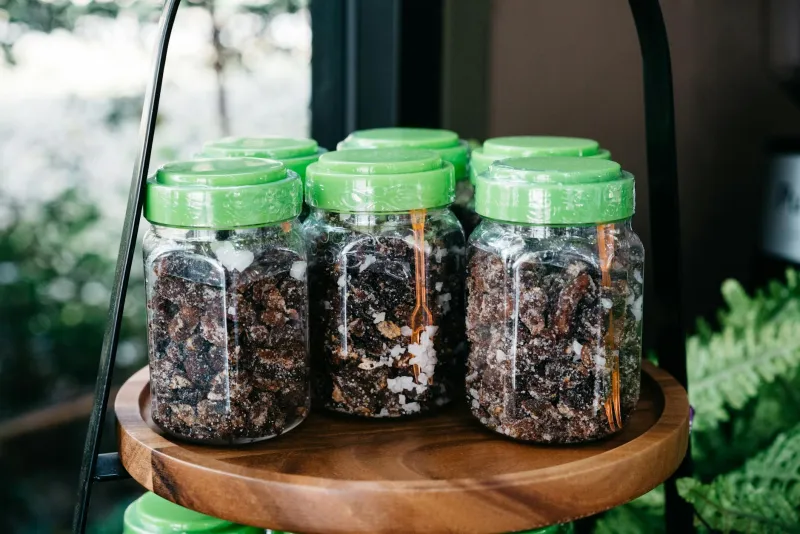
The Condiment America Forgot It Ever Loved
Imagine sitting down to a roast dinner in 1790s Philadelphia and reaching past the salt for a small dark bottle of something pungent, savory, and deeply fermented. No, it's not Worcestershire sauce. It's walnut ketchup — and for most of American culinary history, it was as common on the dinner table as bread.
Most people assume ketchup has always meant tomatoes. It hasn't. The word itself traces back to Southeast Asian fish sauces, passed through British colonial kitchens, and arrived in America wearing a completely different outfit. For decades — arguably for more than a century — the version Americans actually used was made from unripe walnuts, and it was nothing like the sweet red condiment crowding grocery store shelves today.
What Walnut Ketchup Actually Is
The process starts in early summer, when black walnuts are still green and soft enough to pierce with a needle. The nuts get packed in salt and left to break down over several days, releasing a dark, almost inky liquid. That brine gets combined with vinegar, shallots, anchovies, cloves, ginger, and black pepper — sometimes mace, sometimes horseradish — then slowly simmered and bottled.
The result is something between a thin steak sauce and a complex umami bomb. It's sharp without being hot, savory without being salty, and fermented in a way that adds layers most modern condiments don't come close to matching. Cooks used it the way we might reach for soy sauce or Worcestershire today — a splash into gravies, a drizzle over cold meats, a finishing note in soups.
Recipes appear in American cookbooks going back to the 1700s. Amelia Simmons included a version in American Cookery, often cited as the first truly American cookbook, published in 1796. Mary Randolph's The Virginia Housewife from 1824 has one too. These weren't novelty recipes. They were staples.
Why It Disappeared
The short answer is industrialization. The longer answer is a little more interesting.
Walnut ketchup requires patience. You need green walnuts at exactly the right moment in early summer — a window of maybe two or three weeks. The fermentation takes time. The process is fiddly. In an era when home cooks had the time and the motivation to manage a kitchen pantry from scratch, that wasn't a dealbreaker. But as the 19th century gave way to the 20th, and factory-made foods started filling shelves with shelf-stable, standardized products, labor-intensive homemade condiments quietly faded.
Tomato ketchup, meanwhile, was perfectly suited for mass production. Tomatoes were cheap, abundant, and easy to process at scale. Add sugar and vinegar, cook it down, bottle it — done. Heinz cracked the commercial formula in the 1870s and spent decades marketing it as the modern, hygienic alternative to homemade sauces. By the early 1900s, the battle was essentially over. Walnut ketchup didn't lose on flavor. It lost on convenience.
The Small, Stubborn Revival
Here's where things get genuinely exciting for anyone who cares about what food used to taste like.
A scattered community of food historians, fermentation enthusiasts, and home cooks has been quietly resurrecting walnut ketchup over the past decade or so. Part of it is the broader fermentation revival — the same wave that brought kombucha and kimchi into mainstream American kitchens has made people curious about older preservation traditions. Part of it is a growing interest in culinary archaeology, in recovering flavors that existed before industrial food flattened everything into sameness.
If you live near black walnut trees — common across the eastern United States and much of the Midwest — you may already have access to the main ingredient. The challenge is timing. Green walnuts need to be harvested before the inner shell hardens, usually in late June or early July depending on your location. A knitting needle or skewer is the classic test: if it slides through easily, you're in the window.
From there, the process is surprisingly approachable. Salt the walnuts, let them sit and weep their dark liquid for several days, then simmer with your aromatics and vinegar, strain, and bottle. Most recipes suggest letting it age for at least a few weeks before using. Some say a year makes it extraordinary.
Why It's Worth Knowing About
Beyond the novelty factor, walnut ketchup offers something genuinely useful to modern cooks: a deeply savory, fermented condiment with no added sugar, no artificial anything, and a flavor profile that's hard to find anywhere else. Chefs who've worked with it describe it as a secret weapon — the kind of ingredient that makes people ask what's in a dish without being able to identify it.
There's also something quietly radical about making it. In a food culture that's almost entirely mediated by brands, apps, and supply chains, reaching back to a condiment that Americans were making in their own kitchens two hundred years ago feels like recovering something real.
The red stuff isn't going anywhere. But if you've ever felt like your condiment shelf was missing something with a little more character, the answer might be growing on a walnut tree down the road — and it's been waiting about a hundred years for you to notice it.