Before Food TV, There Were the Notebook Keepers: The Ordinary Americans Who Quietly Mapped a Nation's Flavors
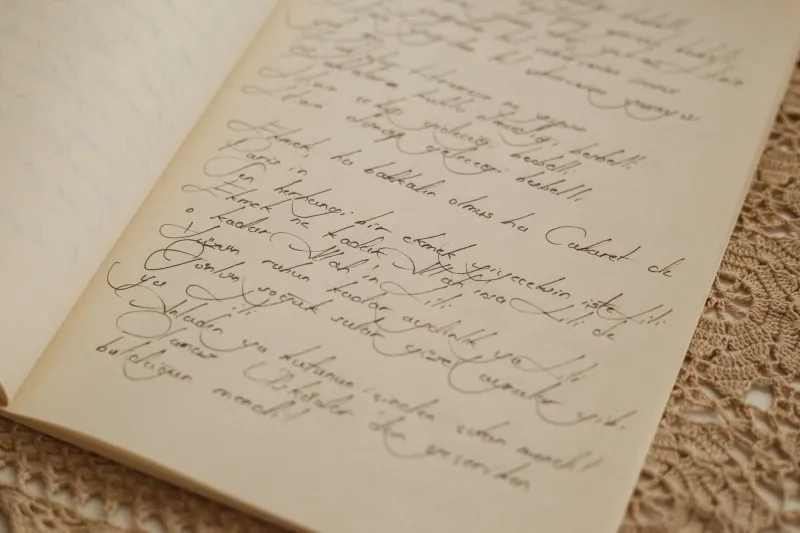
Somewhere in a farmhouse attic in rural Ohio, there's probably a water-stained notebook sitting inside a shoebox. The handwriting is cramped. The pages are foxed with age. And if you could read it—really read it—you'd find something remarkable: a record of what people in that county actually ate in 1887, written down not for posterity, but because someone needed to remember a good recipe before they moved on.
These notebooks weren't diaries. They weren't cookbooks. They were something stranger and more useful than either—a grassroots documentation project that nobody organized, nobody funded, and almost nobody talks about today.
The People Who Wrote Everything Down
In the 1800s and early 1900s, the people most likely to carry a pocket notebook weren't writers or academics. They were traveling salesmen, circuit preachers, itinerant tradespeople, and farm wives who swapped recipes the way people today swap phone numbers.
A dry goods salesman riding a circuit through Appalachia might spend a night at a family's home and wake up to a breakfast he'd never tasted before—some combination of dried corn, local fat, and a spice he couldn't quite name. If it was good enough, it went in the notebook. Same with a church elder visiting congregations across the Mississippi Delta, or a midwife making her rounds through isolated mountain communities.
None of them thought of themselves as food historians. They were just practical people writing down things they didn't want to forget.
What they produced, collectively, was something extraordinary: a distributed, handwritten archive of American regional food culture at its most isolated and authentic—before railroads homogenized supply chains, before canned goods flattened local flavor, and long before any food writer thought to pay attention.
What the Notebooks Actually Reveal
Food historians who've had access to these personal archives describe a picture of American cuisine that looks almost nothing like the broad strokes we usually get taught.
The differences weren't just about ingredients—they were about technique, timing, and the specific logic of a community's survival. A family in coastal Georgia might cure pork in a completely different brine than a family two states inland, not because one was better, but because the humidity, the available salt, and the seasonal rhythms demanded it. A notebook from a traveling hardware merchant in the 1890s Midwest might contain three completely different approaches to corn bread within fifty miles of each other—each one a living record of a community's specific relationship with heat, fat, and whatever was on hand.
These weren't variations on a theme. They were genuinely different food cultures, operating in parallel, largely unaware of each other.
Why Nobody Published Them
Here's the part that stings a little: most of these notebooks never went anywhere. They weren't meant to.
The women who wrote the majority of them—and it was mostly women—had no publishing infrastructure waiting for them. The few formal cookbooks that existed in that era were aimed at a middle-class audience and tended to flatten regional specificity in favor of something more universally legible. A recipe that called for "the fat that collects after smoking a hog shoulder" wasn't going to make it past an editor in New York.
So the notebooks stayed private. They got passed down through families, sometimes carefully preserved, more often just shoved in a drawer. A significant number were lost entirely—thrown out during estate sales, damaged by floods, or simply discarded by descendants who didn't recognize what they were holding.
The ones that survived did so almost by accident.
The Accidental Blueprint
What's fascinating is how much of what we now consider "authentic" American regional cuisine actually traces back to these informal records—not to published cookbooks or restaurant menus.
Food researchers who've spent time in local historical societies and family archives describe finding notebooks that predate the first documented versions of iconic regional dishes by decades. A handwritten ledger from a traveling seed merchant in Louisiana in the 1870s might contain a gumbo recipe that looks nothing like the version that got canonized later—and yet feels more alive, more specific, more tied to an actual place and season.
The notebooks captured American food before it got edited. Before it got made presentable for a national audience. Before anyone decided which version was the "real" one.
What We Lost—and What Survives
The irony is that the homogenization these notebooks predate is exactly what makes them so valuable now. In an era when you can get the same fast-casual burrito bowl in Portland, Oregon and Portland, Maine, the specificity preserved in those handwritten pages feels almost radical.
A handful of food historians and archivists have been quietly working to digitize and catalog surviving notebooks. Some universities with strong regional history programs have small collections. Occasionally, a family will donate a box of old papers and someone will realize what's inside.
But there's no central archive. No comprehensive project. Most of what was written down is still sitting in attics, waiting.
If you happen to have a box of old family papers you've never fully gone through—especially anything from the 1800s or early 1900s—it might be worth a closer look. You probably don't have a lost culinary atlas in there.
But you might.