Your Kitchen Spice Rack Used to Be the Medicine Cabinet—And Science Has Some Opinions About That
There's a jar of turmeric sitting in your spice cabinet right now that your great-great-grandmother would have recognized immediately—not as a cooking ingredient, but as medicine.
She probably kept it for joint pain. Her doctor may well have recommended it. And depending on which study you read, she might not have been wrong.
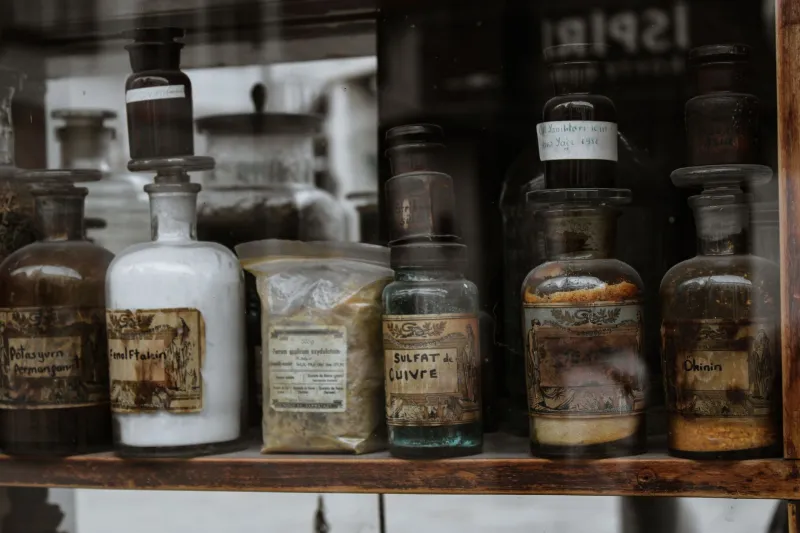
For the first century or so of American life, the line between the kitchen and the pharmacy was blurry at best and nonexistent at worst. Physicians working before the pharmaceutical industry existed had a fairly limited toolkit, and a significant portion of it came from the same shelves where families kept their cooking supplies. Spices weren't just flavor—they were treatment. Documented, prescribed, and taken seriously by the medical establishment of the time.
What's remarkable is how many of those treatments are now being studied by researchers who didn't expect to find much—and are finding more than they bargained for.
The Era When Doctors Wrote Spice Prescriptions
Through much of the 18th and 19th centuries, American physicians operated within a tradition that drew heavily on European herbal medicine, Indigenous plant knowledge, and a pragmatic understanding that certain substances produced reliable effects in the human body.
Ginger was widely prescribed for digestive complaints—nausea, indigestion, and what physicians of the era called "stomach flux." Cloves were recommended for toothache and oral infections, often applied directly to the affected area. Cayenne pepper appeared in medical literature as a circulatory stimulant, prescribed for patients presenting with what we'd now recognize as poor circulation or chronic cold extremities.
Turmeric—imported and therefore more expensive than local herbs, but still available to families with means—was documented as a treatment for inflammatory conditions, liver complaints, and skin problems. Cinnamon was prescribed for blood sugar regulation in diabetic patients long before anyone had the biochemical vocabulary to explain why it might work.
These weren't folk remedies operating outside the medical mainstream. They were standard practice, appearing in physician's handbooks, pharmacy catalogs, and the household medical guides that families kept alongside their Bibles.
What Changed—and Why
The shift happened fast, by historical standards.
The late 19th and early 20th centuries brought a revolution in pharmaceutical chemistry. Aspirin arrived in 1899. Antibiotics followed decades later. The germ theory of disease fundamentally restructured how medicine understood illness, and with it came a new standard: treatments needed to be isolatable, testable, and reproducible in a laboratory setting.
Spices failed that standard—not necessarily because they didn't work, but because their active compounds were complex, variable, and difficult to standardize. A batch of turmeric from one region might have different curcumin concentrations than a batch from another. Ginger's potency varied with how it was dried and stored. You couldn't put a jar of cinnamon through a clinical trial with the same rigor you could apply to a synthesized molecule.
So the spice cabinet got reassigned. It became about flavor. The medicine moved to the pharmacy.
And for decades, that felt like progress.
What the Research Actually Shows Now
Here's where things get genuinely interesting—and a little complicated.
Modern pharmacological research has gone back and looked at a surprising number of traditional spice-based remedies, and the results don't fit neatly into either "it all works" or "it was all superstition."
Ginger has held up remarkably well. Multiple well-designed clinical trials have confirmed its effectiveness for nausea—specifically post-operative nausea and pregnancy-related morning sickness—at levels that compare favorably to some pharmaceutical antiemetics. The mechanism is understood: ginger contains compounds called gingerols and shogaols that interact with serotonin receptors in the gut. Your great-grandmother's ginger tea for an upset stomach was operating on real biochemistry.
Turmeric (curcumin) is the complicated one. The research on curcumin is genuinely promising—anti-inflammatory properties, potential applications in joint pain, some intriguing early data on cognitive function—but it's also beset by a significant problem: curcumin is poorly absorbed by the human body on its own. Most of the studies showing strong effects use enhanced delivery methods that a kitchen spice jar can't replicate. The traditional remedy may have had real effects at the margins. Whether it delivered what modern studies suggest is possible is a harder question.
Cloves for toothache are essentially confirmed. Eugenol, the primary active compound in cloves, is a legitimate topical anesthetic and antiseptic. It's still used in dentistry today. When your ancestors packed a clove against a sore tooth, they were doing something that actually worked.
Cinnamon for blood sugar remains contested. Some studies show modest effects on fasting glucose in people with type 2 diabetes. Others show nothing significant. The honest answer is that the evidence is real enough to be interesting and not strong enough to be conclusive. Which is probably not the clean answer anyone was hoping for.
Cayenne has also gotten serious attention. Capsaicin—the compound that makes cayenne hot—is now a documented pain reliever used in topical creams for conditions including arthritis and nerve pain. The circulatory effects that 19th-century physicians observed have biological basis. This one largely checks out.
The Part Worth Sitting With
The takeaway here isn't that you should throw out your prescriptions and start self-medicating with whatever's in the spice drawer. That would be a genuinely bad idea.
But it is worth noticing that the people who lived before pharmaceutical chemistry weren't operating entirely in the dark. They were working with real compounds that had real effects—effects that modern science is now mapping with tools those physicians couldn't have imagined.
Some of what they prescribed was right. Some of it was wrong. Some of it was right for reasons they didn't understand, and some of it was wrong in ways that looked right because people got better anyway.
That's not so different from medicine in any era.
What is different is that we stopped paying attention to the spice rack for about a century—and now researchers are having to go back and do the work of figuring out what was actually there.
Your kitchen cabinet has been quietly waiting for them to catch up.