Syrup, Luck, and a Ladle: The Soda Counter Tinkerers Who Accidentally Invented American Flavor
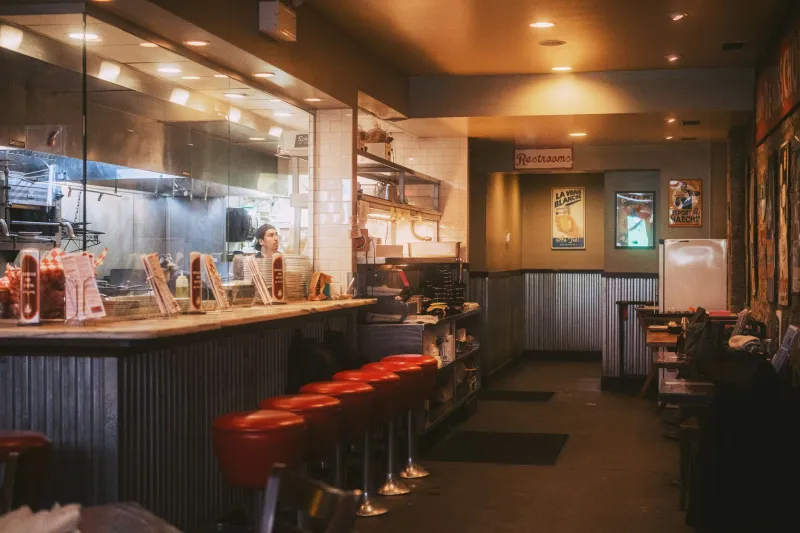
Imagine you're standing behind a marble counter in a small Ohio town sometime around 1910. You've got a row of syrup jugs, a carbonation rig that occasionally terrifies you, and a line of customers who want something cold and interesting. Nobody handed you a recipe. Nobody ran a focus group. You just start mixing things.
That's essentially how a remarkable chunk of American flavor history got written.
Long before multinational food companies employed rooms full of chemists to engineer the perfect artificial strawberry note, the real flavor pioneers were working lunch counter operators and soda fountain jockeys in small American towns — people who mixed things by feel, by accident, and sometimes by sheer desperation to keep a customer from walking out the door.
The Counter as Laboratory
The golden age of the American soda fountain ran roughly from the 1880s through the 1950s. During those decades, nearly every town of any size had at least one. Pharmacies, dime stores, and lunch counters all ran fountains as profit centers, and the people operating them had enormous creative latitude.
Syrup suppliers — regional companies that most people have never heard of — would send operators new concentrates to experiment with. Operators would combine them, add kitchen extracts meant for baking, throw in a squeeze of citrus, or stir in a spoonful of something they'd found in the back of a supply cabinet. The results were rarely documented. Most operators kept their house combinations secret the way a poker player guards a good hand.
What's remarkable is how often those improvised combinations locked onto something genuinely extraordinary — a balance of sweet, sour, bitter, and something harder to name that made customers come back specifically for that version of a drink, not the official brand version.
Vanilla's Complicated Debt
Take vanilla. Most Americans associate the flavor with simple sweetness — ice cream, birthday cake, the baseline of comfort food. But the vanilla flavor profile that dominates American packaged food today is far more specific than the raw bean suggests. It's a particular ratio of sweet to floral to slightly smoky that food historians have traced back not to European confection traditions but to the improvised vanilla syrups that soda fountain operators blended themselves.
Early fountain operators couldn't always get consistent vanilla extract, so they'd stretch it — adding a touch of coumarin (a natural compound found in tonka beans), a little caramel coloring, sometimes a whisper of anise. The result was warmer and rounder than straight vanilla. When big syrup companies eventually tried to standardize "vanilla flavor" for mass production, the ones that succeeded were the ones that reverse-engineered what the fountain operators had stumbled into, not what the actual vanilla bean actually tasted like.
That's why artificial vanilla in American products tastes the way it does. It's not an approximation of the bean. It's an approximation of a lunch counter accident.
Cherry, Cola, and the Flavor That Shouldn't Work
Cherry-cola is another case worth examining. The combination sounds almost too simple — cherry syrup plus cola — but the specific cherry flavor associated with American fountain drinks is its own creation entirely. Real cherries don't taste like that. Maraschino syrup doesn't quite taste like that either.
What fountain operators discovered through years of mixing was that a particular blend of cherry extract, a small amount of almond extract (which amplifies fruitiness in a way that's difficult to explain but immediately recognizable), and a touch of citric acid produced something that read as "cherry" to American palates in a way that felt more satisfying than actual cherry juice. The almond note was the secret — and it came from baking extracts that operators grabbed from the same shelf where they kept vanilla.
When major cola companies began rolling out cherry variants in the 1980s, they were working from market research that pointed back to exactly this fountain tradition. The customers who demanded cherry cola weren't asking for fruit. They were asking for a memory.
The Flavor That Got Away
Not every accidental invention made it to mass production. Oral histories collected by food researchers and local historical societies are dotted with descriptions of regional fountain flavors that never traveled beyond their home county.
There was a ginger-lime-honey combination popular at a cluster of lunch counters in rural Georgia that customers apparently drove miles for. A vanilla-mint hybrid that a Minnesota operator served warm in winter. A grape-lemon blend in a small Texas town that one old-timer described as "the best thing I ever drank and I can't find it anywhere."
These flavors didn't fail because they weren't good enough. They failed because the operators who made them died, retired, or simply closed up shop without writing anything down. In an era before intellectual property mattered to a guy running a fountain counter, the recipe lived in muscle memory — and when the muscle memory walked out the door, so did the flavor.
Why This Still Matters
There's something worth sitting with here. The flavor landscape of American food — the specific tastes baked into sodas, candies, ice cream, and packaged snacks that feel deeply, almost genetically familiar to people who grew up in the US — wasn't designed. It was discovered by people who had no idea they were doing anything historically significant.
Modern food scientists working at major companies are extraordinarily skilled, but they're largely optimizing within a flavor space that was roughed out by lunch counter operators working on instinct. The target they're aiming at was drawn by someone who just wanted to make something that tasted good on a Tuesday afternoon in 1923.
A handful of craft soda makers and small-batch syrup producers have started digging into this history deliberately, trying to reconstruct regional fountain flavors from old pharmacy records, local newspaper ads, and the memories of elderly customers. It's slow, imperfect work. But every once in a while, someone gets a combination right — and somebody in the room says, without knowing why, that tastes like something I remember.
That feeling is the whole story.