The Smokehouse Matriarchs: The Women Who Mastered America's Meat Preservation — and Never Got the Byline
The Smokehouse Matriarchs: The Women Who Mastered America's Meat Preservation — and Never Got the Byline
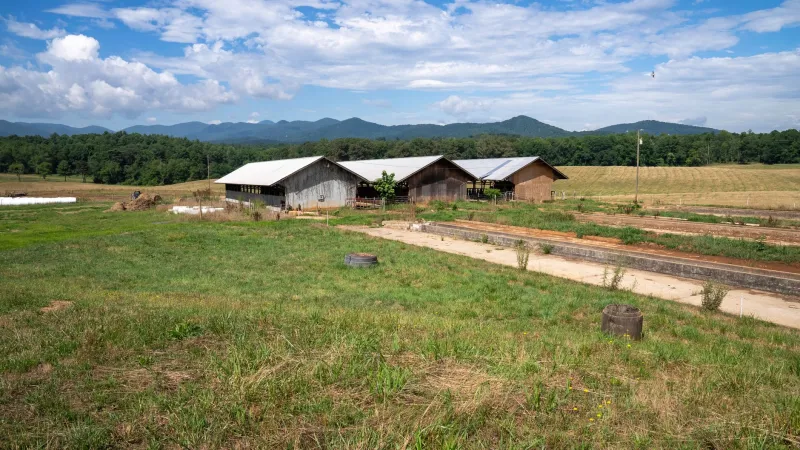
Picture a smokehouse. Maybe you're imagining a weathered wooden structure out behind a farmhouse, somewhere in Tennessee or Arkansas or the Virginia highlands. Hams hanging from the rafters, hickory smoke curling through the gaps in the boards, the sharp, deep smell of salt and wood and time.
Now ask yourself: who's managing that operation in your mental image?
If you pictured a man, you've absorbed exactly what the historical record wanted you to absorb. Because across much of rural America — in Appalachia, the Ozarks, the Carolina piedmont, the deep South — the people who actually ran the smokehouse were, in enormous numbers, women. They selected the wood. They calculated the salt ratios. They monitored the temperature by feel and instinct and decades of accumulated knowledge. They decided when a ham was ready and when it needed another week. They were the ones who knew.
The men, more often than not, were the ones who showed up at market day to sell what those women had made.
The Craft Nobody Credited
Meat preservation in pre-refrigeration rural America was not a casual skill. It was a high-stakes, technically demanding practice that stood between a family and genuine hunger during winter months. Get the salt cure wrong and the meat spoiled. Misjudge the smoke and you'd ruin weeks of work. Choose the wrong wood and the flavor — and the preservation — suffered.
The women who managed smokehouses were operating with what food anthropologists now recognize as sophisticated applied chemistry, even if nobody used that language at the time. Salt draws moisture out of meat through osmosis, creating an inhospitable environment for bacteria. Smoke deposits antimicrobial compounds — phenols, aldehydes, organic acids — onto the meat's surface, extending preservation further. The combination of salt, smoke, temperature, and time, when calibrated correctly, could keep a ham edible for a year or more.
Those calibrations lived in the hands and memories of the women who did the work. Not in written recipes — most of this knowledge was transmitted orally, grandmother to daughter to granddaughter, adjusted for local conditions, local wood availability, local salt sources. It was a living tradition, not a documented one, which is precisely why it proved so easy to erase from the official record.
Oral Histories Tell a Different Story
Food historians and cultural anthropologists who have spent time collecting oral histories from Appalachian and Southern communities consistently encounter the same pattern. When older community members describe the smokehouse traditions of their childhoods, the person they remember managing the process is almost always a woman.
"My grandmother ran the smokehouse," is a sentence that appears, in various forms, in oral history collections from Kentucky, West Virginia, North Carolina, Tennessee, and Missouri. "She knew things about that smoke that nobody else did." "She could tell by the color of the meat whether it was ready." "She'd wake up in the night to check the temperature."
These women weren't assistants or helpers in the process. They were the process. The knowledge was theirs. The expertise was theirs. The judgment calls — which determined whether a family ate well or poorly through a long winter — were theirs.
What they rarely received was acknowledgment beyond their immediate households. Regional cookbooks from the 19th and early 20th centuries, when they mentioned smokehouse techniques at all, typically framed the information in gender-neutral or male-coded language. Newspaper accounts of prize-winning hams at county fairs credited the farm family, or the farm's patriarch, not the woman who had spent weeks nursing that specific cut through its cure.
The Wood Question
One of the most technically interesting aspects of traditional smokehouse management — and one that these women clearly mastered — was wood selection.
Different hardwoods produce dramatically different smoke chemistry. Hickory, the dominant choice across much of the South and Appalachia, produces a strong, bacon-forward smoke with high phenol content. Apple wood runs sweeter and lighter. Cherry adds a mild fruitiness. Oak burns long and even, producing a reliable, penetrating smoke that works well for longer curing processes.
The women managing these smokehouses weren't randomly grabbing whatever wood was nearby. Oral accounts consistently describe deliberate selection — specific woods for specific cuts, specific combinations for specific flavor profiles, adjustments based on the season and the meat's starting condition. This was sophisticated sensory knowledge built over years of close observation, the kind of expertise that in any other context would be called mastery.
Some accounts describe women who could identify a smokehouse's wood blend from the smell of the finished product alone. That's not folk wisdom — that's a highly trained palate doing real analytical work.
The Revival, Done Right
Here's where the story takes an unexpectedly hopeful turn.
A small but growing wave of women-led heritage meat operations across Appalachia, the Ozarks, and the South is consciously reclaiming this tradition — not just as a craft revival, but as an explicit act of historical restoration.
Operations like these aren't simply making good charcuterie. They're doing the research. They're hunting down oral histories. They're talking to the oldest women in their communities who still remember the techniques. They're treating the smokehouse as a site of cultural memory as much as a production facility.
Some are working with food historians and ethnobotanists to document the regional wood traditions that were never written down. Others are partnering with Indigenous food sovereignty organizations to acknowledge the even deeper roots of smoke-curing knowledge in North America — traditions that predate European settlement by centuries and that informed the techniques later adopted by Appalachian and Southern farming communities.
The products these operations produce have started attracting serious attention from chefs and food writers who recognize that heritage curing methods yield flavors and textures that industrial processing simply cannot replicate. The slow cure, the real smoke, the patient timing — these produce something genuinely different.
But the women running these operations are careful to make the point explicit: what they're reviving isn't just a technique. It's a lineage. They're not inventing something new. They're returning credit to the people who built the tradition in the first place — the grandmothers and great-grandmothers who woke up in the middle of cold nights to check on a smokehouse fire and never once expected anyone to write their names down.
Giving the Byline Back
American food history has a long habit of centering the marketable product while obscuring the labor that created it. The smokehouse is one of the clearest examples of that habit at work — a space where women's expertise was foundational, continuous, and technically remarkable, and where the historical record managed to look directly at that expertise and write around it.
The hams were famous. The women who made them were not.
That's starting to change, slowly, in the way that most overlooked histories eventually do — through the patient work of people who decide the gap between what happened and what got recorded is worth closing.
The smoke is still rising. The names are finally following it up.