Grandma's Winter Brew: The Fermented Mountain Tonic That Beat Kombucha by a Century
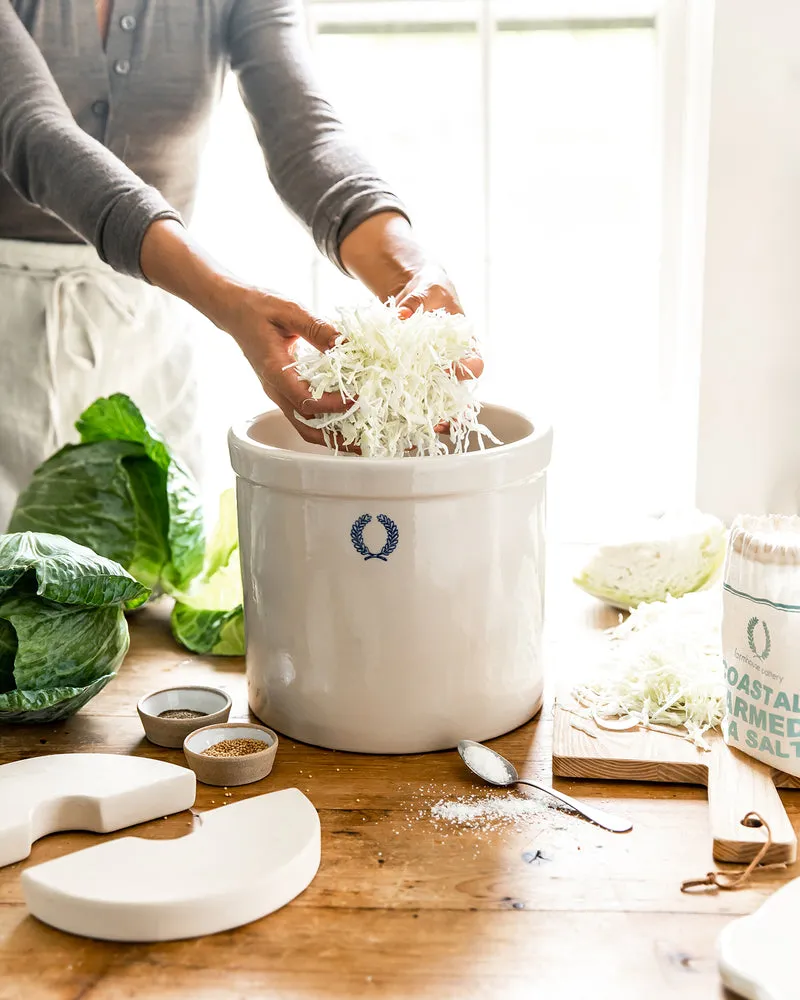
Photo: rustic ceramic crock jar with fermenting fruit drink on old wooden farmhouse kitchen table, via www.farmhousepottery.com
Grandma's Winter Brew: The Fermented Mountain Tonic That Beat Kombucha by a Century
Somewhere in eastern Kentucky, a woman in her eighties can still describe — in precise, unhurried detail — exactly how her grandmother made the family's winter tonic. You'd start with dried apple peels. Add a handful of raisins if you had them. Wild honey from a neighbor's hive. A little ginger root pulled from the cold cellar. Then you'd wait, and you'd watch, and the whole thing would quietly come alive on its own.
No starter culture. No pH strips. No $14 bottle with a wellness brand printed on it.
Just fermentation, the way mountain people had practiced it for generations — and a finished drink that tasted somewhere between apple cider vinegar and a fizzy fruit shrub, with a sharpness that could wake you right up on a February morning.
This drink doesn't have one agreed-upon name. Some families called it "fruit beer." Others called it "the tonic." A few referred to it simply as "the crock drink," because it lived in a ceramic crock in the corner of the kitchen, perpetually bubbling. Whatever the label, the tradition was widespread across Appalachian households from the late 1800s well into the mid-twentieth century — and then it quietly disappeared, crowded out by commercial sodas, pasteurized juices, and the idea that anything made in a crock at home was somehow suspect.
The Recipe That Was Never a Recipe
That's the first thing you notice when you start asking around: there is no canonical recipe. That was the whole point.
Appalachian tonic brewing was an oral tradition in the truest sense. Instructions weren't jotted in the margins of cookbooks. They weren't tucked into recipe boxes. They were spoken — demonstrated, really — with a grandmother standing beside a granddaughter, pointing at the crock, explaining what the bubbles should look like, what the smell should tell you, when the thing was ready and when it needed another day.
Food historians who study Appalachian foodways describe this as "embodied knowledge" — wisdom that lives in the hands and the senses rather than on paper. The problem with embodied knowledge is that it's genuinely fragile. When the generation carrying it stops teaching, the knowledge doesn't retire gracefully. It just vanishes.
The core ingredients varied by season and by what a family had on hand, but a few elements appeared consistently across accounts: dried or fresh fruit (apple scraps were most common, though peach and pawpaw showed up regularly), some form of sweetener to feed the wild yeast, ginger or spicebush for heat and preservation, and water. The wild yeast came from the fruit skins themselves — the same principle behind wild sourdough — and the fermentation happened naturally, without any intervention beyond patience and the occasional stir.
Some families added a splash of the previous batch to kick-start the next one, a technique microbiologists would now recognize as back-slopping: a method that also selectively cultivates the strongest, most active microbial cultures over time.
What the Science Is Actually Finding
Here's where it gets interesting.
For most of the twentieth century, traditional fermented tonics like this one were dismissed as folk remedies — harmless maybe, but not exactly medicine. The families who made them believed otherwise, attributing fewer winter colds, better digestion, and more sustained energy to their daily cup. Doctors mostly smiled and moved on.
Recent microbiological research is making that smile a little harder to hold.
Studies on wild-fermented fruit beverages — particularly those using apple-based substrates and ambient yeast cultures — have found robust populations of Lactobacillus and Acetobacter species, the same microbial families that give kombucha and apple cider vinegar their documented gut-health benefits. The acetic acid produced during fermentation creates an environment hostile to certain pathogens. The live cultures themselves may support intestinal microbiome diversity. And the ginger compounds commonly added to these tonics have separately well-documented anti-inflammatory properties.
In other words: the health claims weren't superstition. They were observation. These women were watching their families get sick less often in winter, and they correctly identified the tonic as part of the reason.
One food scientist studying Appalachian fermentation traditions put it plainly: "They didn't have the vocabulary of probiotics or gut flora, but they had something arguably more reliable — generations of empirical observation. They knew it worked."
Why It Disappeared — And What's Coming Back
The mid-twentieth century was not kind to home fermentation. The rise of commercial refrigeration, pasteurized beverages, and a cultural pivot toward the modern and the manufactured made anything bubbling in a crock feel old-fashioned at best, unsafe at worst. Public health messaging, while well-intentioned, often painted all fermentation with the same broad brush of suspicion.
So the crocks went into storage. The grandmothers who knew the tradition aged out of it. And by the 1970s and 1980s, the mountain tonic had become a memory — something your great-aunt mentioned once, something you half-remembered from a childhood visit to a hollow in West Virginia.
 Photo: West Virginia, via i.redd.it
Then kombucha happened. Then kefir. Then the gut-health movement turned probiotic beverages into a multi-billion-dollar industry, and suddenly the idea of drinking something fermented and tangy every morning felt cutting-edge rather than quaint.
A small but growing number of Appalachian food preservationists are now working to document and revive these traditions before the last living practitioners are gone. Oral history projects in Kentucky, Tennessee, and western North Carolina are recording the knowledge that was never written down. A handful of small-batch producers have begun bottling versions of the drink for regional farmers markets, though they'll be the first to tell you that a commercial product is a pale shadow of what came out of a family crock.
The Lesson the Wellness Industry Missed
The kombucha boom taught America that fermented drinks could be good for you. What it didn't teach — and what the Appalachian tonic tradition understood intuitively — is that the best version of that drink was probably already in your kitchen, made from the scraps you were about to throw away, alive with the wild yeast that exists naturally in the fruit you grew yourself.
The wellness industry packaged the concept beautifully. But the mountain grandmothers had the concept first.
And somewhere in eastern Kentucky, a woman in her eighties still remembers exactly how it's done.