How a Cold Schoolhouse and Whatever Was in the Lunch Pail Quietly Invented American Comfort Food
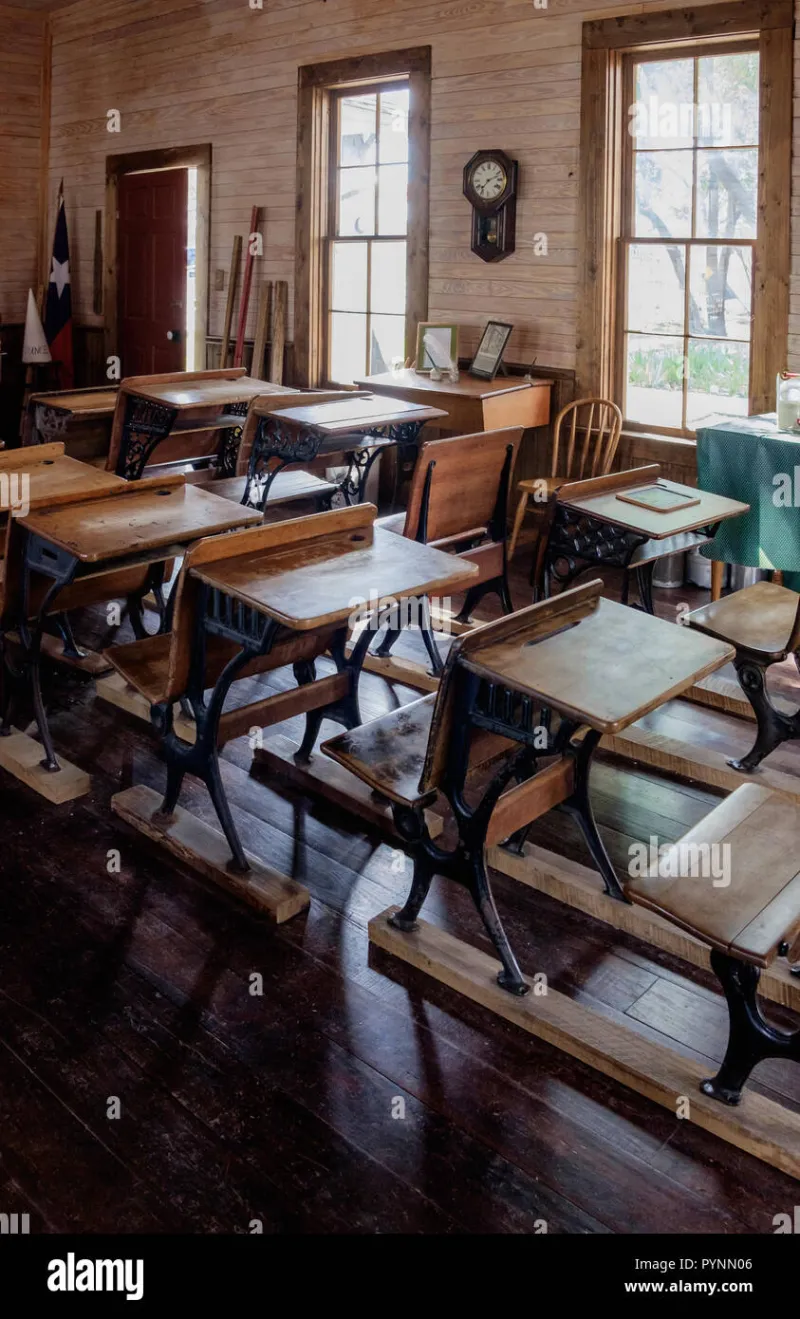
Photo: vintage one-room schoolhouse interior with wooden desks and iron woodstove in rural America, via c8.alamy.com
Picture a one-room schoolhouse in rural Indiana, winter of 1893. Twenty-three kids. One woodstove. A teacher — almost certainly a young woman in her early twenties — who is responsible for reading, arithmetic, penmanship, and also, somehow, making sure nobody eats a lunch that's been frozen solid by the walk to school.
This is not a situation that calls for culinary creativity. Except that it did, every single day, and the women who navigated it were quietly building the foundation of what Americans now call comfort food.
The one-room schoolhouse era — roughly 1850 to 1930, with the peak years falling between the Civil War and World War I — is one of the most under-examined chapters in American food history. Food scholars spend considerable energy on restaurant culture, on immigrant cooking, on the rise of the processed food industry. The schoolhouse barely gets a footnote. Which is strange, because what happened inside those buildings, at lunchtime, in rural communities across the Midwest and South, shaped regional eating habits with a consistency that no restaurant or cookbook could have matched.
The Lunch Pail Problem
Rural families in the late nineteenth century didn't pack lunches so much as they sent whatever was available. Cold cornbread. A wedge of leftover salt pork. Dried beans in a jar. A boiled potato. Biscuits from breakfast. Whatever the season and the farm produced — that was lunch.
The problem was that most of it arrived cold, often partially frozen in winter, and in quantities that varied wildly from family to family. A teacher managing twenty kids might be looking at a collection of food that included surplus from a prosperous farm family and almost nothing from a family having a hard year.
Teachers solved this the only logical way: they pooled it.
Not always, and not formally — but the practice of combining what students brought, warming it on or near the woodstove, and stretching it into something that fed everyone adequately was common enough to show up repeatedly in memoirs, county histories, and the personal letters of rural educators from this period. One Indiana teacher's diary from the 1880s describes stirring together leftover beans, corn, and salt pork in a single pot "so the children might all have something warm" on a day when several students arrived with almost nothing.
That, in its most essential form, is a casserole. It's also the foundational logic of baked bean dishes, corn puddings, and the dozens of "combination" dishes that would later be codified in Midwestern and Southern church cookbooks as beloved regional staples.
The Standardization Nobody Planned
Here's the fascinating part: because teachers moved between communities, taking positions in different districts as their careers progressed, they carried these improvised lunch systems with them.
A teacher who'd developed a reliable method for warming and combining student contributions in one county would bring that approach to the next school, in the next community. Families who noticed their children coming home talking about a particular dish — beans cooked a certain way, or bread served with a specific combination — would ask about it, replicate it at home, and fold it into their own cooking.
Over decades, this created a kind of informal standardization. Not the top-down standardization of a recipe published in a national magazine, but a ground-level, community-driven convergence around certain dishes and certain techniques. The slow-cooked bean dish that became iconic in rural Missouri. The layered corn and meat preparation that showed up across Appalachian counties. The butter-and-bread combinations that became comfort staples across the Upper Midwest.
None of these were invented in a schoolhouse. But many of them were normalized there — eaten communally, made familiar, transformed from a practical improvisation into something that felt like home.
The Teacher as Unrecognized Food Architect
It's worth pausing on who these teachers actually were.
In rural America during this period, teaching was one of the very few professional paths available to educated women. Many were teenagers or women in their early twenties, hired by school boards at wages that wouldn't have impressed anyone. They were responsible for educating children of wildly different ages and abilities, maintaining discipline, and keeping a fire going — all in a single room with minimal resources.
Adding informal lunch management to that list was simply what the job required. Nobody gave them credit for it, because nobody thought of it as a skill. It was just what you did.
Food historians who study this period are beginning to reconsider that framing. The women who ran one-room schoolhouses were, among other things, practical food system managers. They understood how to make limited ingredients go further, how to combine flavors that worked together under constrained conditions, and how to feed a group of people with wildly different contributions equitably and without waste.
Those are not small skills. They are, in fact, the skills that define what we now call scratch cooking — and they were being practiced daily, at scale, in thousands of rural communities across the country.
The Dishes That Survived
Trace the genealogy of certain American comfort foods far enough back and you'll often find a version of this story.
The Midwestern hotdish — that sturdy, oven-baked combination of starch, protein, and cream of something — has roots in exactly the kind of combination cooking that schoolhouse lunch culture normalized. Church ladies didn't invent it from scratch; they refined and formalized something that families had already been eating in improvised form for decades.
Southern slow-cooked beans with pork — a dish so ubiquitous it barely registers as a recipe anymore — follows the same lineage. The technique of cooking whatever beans a family had alongside whatever pork scraps were available, low and slow until everything melded together, was a practical solution that schoolhouse lunch culture helped spread and standardize across communities.
Even the humble butter sandwich, that simple combination of good bread and real butter that still triggers nostalgia in millions of Americans over forty, has schoolhouse fingerprints on it. Bread and butter was the one thing almost every farm family could send, and in many schoolhouses, it was the dish that appeared on every table, every day, until it became less a meal and more a memory.
The Accidental Culinary Legacy
America loves a founding story for its food. We want to know who invented the cheeseburger, who first put chili on spaghetti, which restaurant started the trend.
The one-room schoolhouse doesn't fit that narrative neatly, because what happened there wasn't invention — it was accumulation. Hundreds of teachers, in thousands of communities, making practical decisions about how to feed children with whatever was available, slowly building a shared food culture that nobody planned and nobody named.
That might be exactly why it worked. The best comfort food was never designed. It was discovered, one cold winter lunch at a time.