The Flavor Peddlers: How Door-to-Door Spice Men Secretly Standardized America's Taste Buds
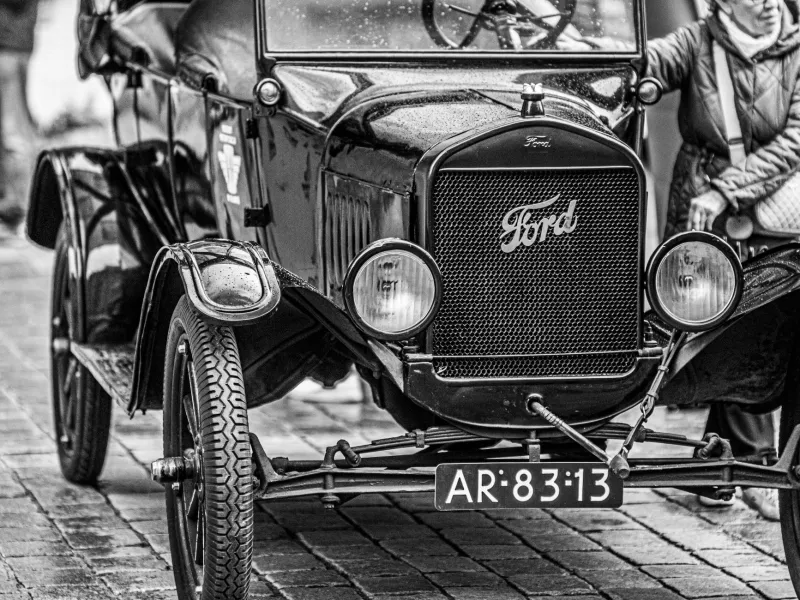
Picture this: A dusty Model T Ford pulls up to a farmhouse in rural Iowa, 1925. Out steps a man carrying a leather satchel filled with small brown bottles that smell like Christmas morning and distant tropical islands. He's not selling insurance or encyclopedias — he's carrying flavors that will transform how an entire continent cooks.
 Photo: Model T Ford, via images-wixmp-ed30a86b8c4ca887773594c2.wixmp.com
Meet America's forgotten flavor revolutionaries: the traveling spice merchants who connected isolated communities through a shared pantry vocabulary, one kitchen at a time.
The Watkins Man Cometh
The J.R. Watkins Company started in 1868 when Joseph Ray Watkins began selling liniment from a horse-drawn wagon in Minnesota. But it was their expansion into vanilla extract and baking spices that quietly rewired America's culinary DNA. By 1920, Watkins employed over 1,000 traveling salesmen who covered territories from the Canadian border to the Gulf of Mexico.
 Photo: J.R. Watkins Company, via www.mommymadethat.com
These weren't casual door-knockers. Watkins men (they were almost exclusively men) underwent extensive training in product knowledge and customer relations. They learned to identify the subtle differences between Madagascar vanilla and Mexican vanilla, to explain why Ceylon cinnamon was worth the extra cost, and to demonstrate how a few drops of lemon extract could transform a plain cake into something special.
More importantly, they carried standardized products. Whether you lived in a Montana mining town or a Mississippi cotton farm, the Watkins vanilla extract in your cupboard was identical to what your cousin used in California. For the first time in American history, home bakers across the continent were working with the same flavor palette.
The Raleigh Route Riders
While Watkins dominated the northern territories, the W.T. Rawleigh Company carved out the South and West. Founded in 1889, Rawleigh built an even more extensive network, with salesmen traveling predetermined routes that ensured every rural household was visited at least four times a year.
 Photo: W.T. Rawleigh Company, via i.pinimg.com
Rawleigh's innovation was the "route book" — a detailed ledger that tracked each customer's purchasing history, family size, and seasonal needs. A good Rawleigh man knew that Mrs. Henderson in Tennessee always ordered extra vanilla before Christmas, while the Johnson farm in Nebraska stocked up on cinnamon every fall for apple harvest.
This wasn't just commerce; it was relationship building. Salesmen became trusted advisors who introduced new flavors and cooking techniques. When Rawleigh began offering coconut extract in the 1920s, their salesmen didn't just sell bottles — they shared recipes and demonstrated how this exotic flavor could enhance everything from cakes to custards.
The Spice Route That Connected America
The genius of these companies wasn't just in their products — it was in their logistics. They created distribution networks that reached places where no store existed. A farmer's wife in North Dakota could access the same quality vanilla extract as a city dweller in Chicago, often at better prices because there was no retail markup.
These salesmen carried more than spices; they carried culinary culture. They shared recipes between customers, spreading successful flavor combinations across vast distances. A cake recipe that worked well in humid Louisiana might be modified for dry Colorado air, with the salesman serving as both messenger and consultant.
The result was a gradual standardization of American baking that happened organically, one kitchen conversation at a time. By the 1930s, a vanilla cake recipe from Maine would taste remarkably similar to one from Texas, not because of mass media or cookbook publishers, but because both bakers were likely using the same Watkins vanilla extract and following advice from the same network of traveling flavor experts.
The Science of Standardization
What made these traveling merchants so effective was their commitment to quality control. Unlike local general stores that might sell whatever extract they could get cheap, companies like Watkins and Rawleigh maintained strict standards for their products.
Watkins vanilla extract, for example, was made using a specific ratio of vanilla beans to alcohol, aged for precise periods, and tested for flavor consistency. When a salesman promised that this bottle would make your cookies taste better than the last batch, he could back up that claim with actual product science.
This reliability created customer loyalty that lasted generations. Families would wait for their "Watkins man" rather than buy inferior products from local stores. Some rural customers maintained relationships with the same salesman for decades, creating a level of trust that modern food companies can only dream about.
The Grocery Store Takeover
The golden age of traveling spice merchants lasted from roughly 1880 to 1950. As America suburbanized and supermarkets proliferated, the need for door-to-door service declined. Why wait for the Watkins man when you could drive to the A&P and buy spices off the shelf?
But something was lost in this transition. The personal relationship between customer and product disappeared. The careful education about quality and proper use vanished. And the regional adaptation of recipes to local conditions — a service that traveling salesmen provided instinctively — became a thing of the past.
The Lasting Legacy
Today, when you reach for vanilla extract at the grocery store, you're participating in a flavor tradition that began with those traveling salesmen. The expectation that vanilla extract should taste the same whether you buy it in Maine or California — that's their legacy. The standard measurements and flavor profiles that make recipe sharing possible across the country — that started in their sample cases.
Some of these companies still exist. Watkins continues to sell extracts and spices, though now primarily through online sales and independent consultants. But the era of the traveling spice man — the flavor peddler who connected isolated communities through shared tastes — belongs to history.
The next time you bake a cake that tastes just like your grandmother's, remember that the similarity might not be genetic. It might be the lingering influence of a forgotten salesman who once carried standardized flavors to kitchens across America, one dusty mile at a time.