Check Your Pantry: Five Grocery Staples That Began Life as Snake Oil
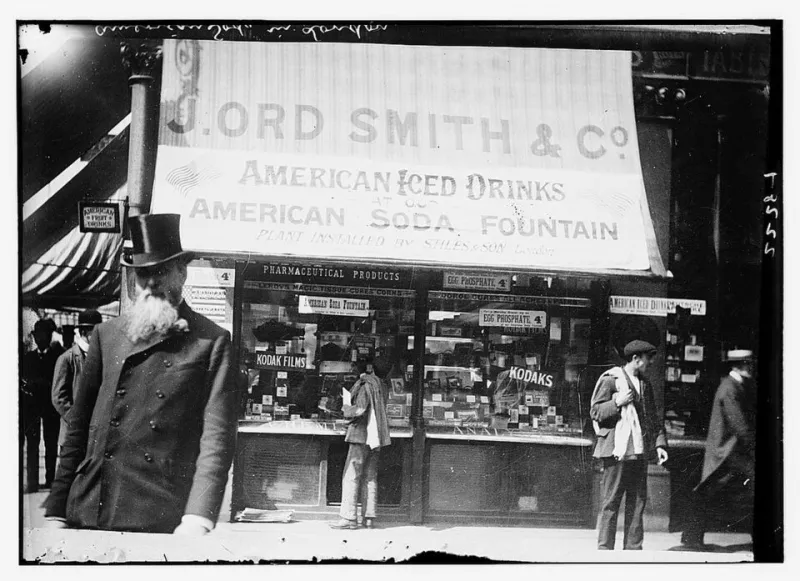
Photo: The Library of Congress, No restrictions, via Wikimedia Commons
Somewhere in your kitchen right now, there are products that used to promise to cure your indigestion, lift your mood, or — in at least one case — save your soul. They don't advertise that history. But the clues survive in their names, their bottles, and the fine print. Here are five to check tonight.
1. 7UP: The 'Mood Stabilizer' in a Green Bottle
When 7UP launched in 1929, it wasn't 7UP. It was 'Bib-Label Lithiated Lemon-Lime Soda,' and its not-so-secret ingredient was lithium citrate — an actual psychiatric medication, still prescribed today for bipolar disorder. The '7' likely nodded to lithium's atomic mass; the 'Up' sold the mood lift. The lithium stayed in the formula until 1948, when the FDA pressured it out, but the name stuck. Every can you buy is technically named after a mood-altering drug.
2. Ketchup: The Pill That Failed, Then the Sauce That Succeeded
In the 1830s, tomatoes were considered suspicious, even poisonous, in America — until a Ohio physician named John Cook Bennett decided tomato ketchup was a digestive wonder drug and sold it in pill form. The ketchup pill craze collapsed almost immediately amid fraud, but the tomato's reputation was rehabilitated. Decades later, the Heinz family leaned hard into 'digestibility' as a selling point, famously commissioning a study of pickle digestion and using the results in advertising. The sweet, thick, standardized ketchup you squeeze today is the direct descendant of a failed medicine.
3. Gatorade: Invented by Actual Doctors, Prescribed Like One
This one's the least hidden — Gatorade really was created by physicians at the University of Florida in 1965 for the football team — but people forget it was sold and distributed like a medical product for years, with early marketing leaning on hospital credibility and electrolyte science. The name, of course, honors the Gators. It's the rare pantry item that went from clinic to corner store without ever really hiding the trip.
4. Dr Pepper: The Pharmacist's Tonic
Charles Alderton, a pharmacist in Waco, Texas, invented Dr Pepper in the 1880s as a fountain drink for his drugstore's soda fountain — the same counter where he dispensed actual medicine. Early ads called it a 'brain tonic' and 'vigor' restorer, and the old advertising claimed it aided digestion. The period-correct period piece: its logo and bottle shape still carry that apothecary DNA, all curves and old-fashioned serif type. It never needed to pretend to be anything but a tonic. It just quietly stopped claiming to be one.
5. Hires Root Beer: Root Beer as Temperance Medicine
Philadelphia pharmacist Charles Hires introduced root beer as 'Hires Root Tea' — a healthful herbal drink, he claimed, and a temperance-friendly alternative to alcohol. He rebranded it 'root beer' partly on the advice of a friend who said 'tea' sounded too weak to sell to working men. The original pitch leaned hard on its medicinal herbs: sarsaparilla, dandelion, juniper. The kit you could buy to brew it at home? Marketed with the language of home health, not home refreshment.
Why It's Worth a Second Look
The common thread: before food advertising matured, the most reliable way to sell a drink or a sauce was to sell it as medicine. The pharmacy counter was America's original beverage laboratory. And the labels are still whispering — 'tonic,' 'original formula,' 'since 1885' — little fossil records of a time when your soda and your prescription came from the same shelf.
So next time you're restocking the fridge, flip a few bottles around. You might be holding a cure-all that gave up the cure and kept the customers.