Your Town's Breakfast Schedule Was Decided a Hundred Years Ago by a Block of Ice
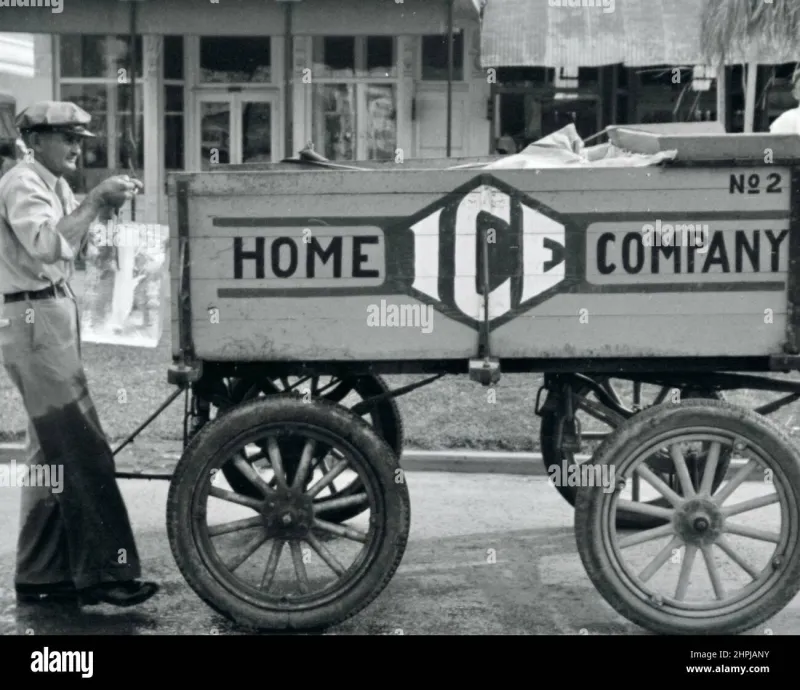
Photo: vintage iceman delivering block of ice 1930s Southern town street, via c8.alamy.com
Ask anyone from a small Southern town and they'll tell you: there's always that one diner. The one where you can get eggs, grits, and a cathead biscuit at nine at night, and nobody blinks. Drive two counties over and suddenly every kitchen closes at 2 p.m. sharp and you're out of luck.
That inconsistency isn't random. It isn't even really about the restaurants. According to the pattern historians and food writers have traced, it's about infrastructure that stopped existing before most of us were born — specifically, ice.
When Ice Was a Schedule
Before electric refrigeration spread through the South in the 1930s and '40s — slower than in the North, thanks to the region's poverty and the Depression's timing — keeping food cold meant ice. And ice meant the iceman's route.
Ice houses harvested winter ice from ponds and rivers, or later produced it artificially, then delivered it daily to homes and businesses along fixed routes. Those routes, in turn, were dictated by train schedules: ice plants clustered around rail depots, because ice traveled by rail and so did everything that needed it — oysters, milk, fresh meat, produce.
Here's where it gets interesting for your breakfast plate. Businesses along the ice routes could keep perishables on hand, which meant they could open early and stay flexible. A diner near an ice house could stock eggs, milk, and butter daily and serve whatever meal customers wanted, whenever they wanted it. A business without reliable ice learned to cook what kept: cured pork, shelf-stable cornmeal, beans. Morning food — the quick, hot, cheap meal — became the safe bet.
The Depot Effect
Train timetables layered a second pattern on top. Depot towns ran on the railroad's clock. Trains arrived early, so cafés near the depot opened before dawn and stayed open until the last passenger train cleared. In many of those towns, that window — roughly 4 a.m. to 10 p.m. — happens to cover breakfast through late dinner. All-day breakfast wasn't a marketing decision. It was a schedule.
Towns that sat off the rail line, by contrast, often developed morning-only markets and bakeries: bake everything at dawn while the oven's hot, sell it before it stales, close up. Some of those communities still have bakeries that sell out by 11 a.m. and shut the door, a rhythm inherited from an era when the day's goods were made and moved in a single morning.
Obsolete Infrastructure, Living Menus
The rail depots are mostly gone. The iceman has been gone even longer. But habits calcify. A diner that's served breakfast all day since 1935 teaches its customers to expect it, who teach their kids, who open their own cafés with the same philosophy. Regional food culture is essentially a game of telephone played across generations — and the first person in the chain was responding to a block of ice on a wagon.
Food scholars call this 'path dependency': early conditions, even arbitrary ones, lock in patterns long after the original reason disappears. The QWERTY keyboard is the famous example. Your hometown's grits-at-midnight is another.
How to Read Your Own Town
Want to test this? Look at a map of your area's old rail lines — many are now rail-trails or abandoned corridors. Notice where the oldest, most schedule-defiant eateries cluster. Chances are they're within a couple blocks of the former depot or the old ice plant, sitting exactly where cold storage and train whistles once ruled the day.
The next time someone grumbles that the local bakery 'never stays open,' they're not fighting a lazy owner. They're fighting 1897.