The Backyard Bread Ovens That Immigrant Families Built — And Nobody in the Neighborhood Noticed
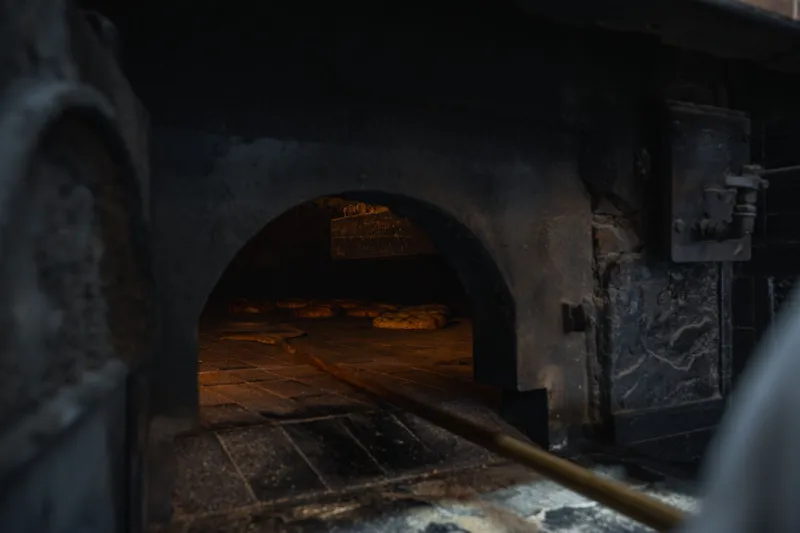
There's a backyard in Pittsburgh's Bloomfield neighborhood where a dome-shaped brick structure sits against the back fence, half-covered in Virginia creeper. The current homeowner uses it to store garden tools. The neighbor across the alley has no idea what it is. But sixty years ago, on Friday afternoons, that oven was the social center of the entire block.
These structures — wood-fired masonry ovens built by Italian, Polish, Slovak, Portuguese, and Greek immigrants throughout the early and mid-twentieth century — are scattered across older urban neighborhoods all over the United States. Most have been repurposed, neglected, or quietly demolished. The ones that survive are rarely recognized for what they are. And what they are, it turns out, is a window into a way of sharing food that American culture has almost entirely lost.
Why They Built Them in the First Place
The logic was straightforward, even if the labor wasn't. Apartment kitchens in early twentieth-century immigrant neighborhoods were small, poorly ventilated, and equipped with stoves that couldn't hold the kind of heat needed for proper bread baking. The loaves that Italian and Eastern European families wanted to bake — dense, thick-crusted, slow-risen — required temperatures that a domestic oven simply couldn't sustain.
So families built their own. Often collaboratively. A single oven in a shared backyard might serve three or four households, with families taking turns based on an informal schedule worked out among neighbors. You brought your dough, you waited your turn, you went home with bread that tasted like the village your grandmother had described.
In cities like Pittsburgh, where Italian and Slovak communities lived in close proximity in neighborhoods like Bloomfield and Lawrenceville, these ovens became informal community institutions. The same structure that baked bread on Friday might roast a whole pig for a wedding on Saturday. Neighbors who had never formally introduced themselves knew each other through the rhythm of the oven's schedule.
The Social Architecture of Shared Baking
What made these ovens remarkable wasn't just the food they produced — it was the social infrastructure they created. Communal baking required negotiation, trust, and a kind of low-stakes interdependence that modern urban life has mostly engineered away.
You had to coordinate. You had to show up on time. You had to know your neighbors well enough to leave your dough in their care while you ran home to check on the children. And in return, you absorbed knowledge — how someone else's family shaped their loaves, what herbs they pressed into the crust, why the Polish family's rye always came out darker than everyone else's.
Food historians who have studied immigrant foodways in industrial cities describe these ovens as a kind of culinary commons. They were spaces where knowledge moved horizontally, between households, rather than vertically, from cookbook to cook. A recipe wasn't something you read — it was something you watched, smelled, and eventually replicated through repetition.
In Philadelphia's South Philly neighborhood, which was heavily Italian-American through much of the twentieth century, oral histories collected by local preservation groups describe backyard ovens operating well into the 1960s. Some families maintained the practice even as commercial bakeries became accessible and affordable, not because they had to, but because the ritual itself had become meaningful.
What Happened to Them
The short answer is: suburbanization, assimilation, and zoning codes.
As immigrant families moved out of dense urban neighborhoods and into postwar suburbs, they left the ovens behind. The rowhouses they vacated were often sold to new owners who had no connection to the baking tradition and no reason to maintain a brick structure in the backyard. Many ovens were demolished during renovation. Others simply crumbled from disuse.
Zoning regulations also played a role. As cities updated their codes through the mid-twentieth century, open-fire cooking structures in residential backyards increasingly ran afoul of safety ordinances. Families who might have maintained the tradition found themselves in legal gray areas.
And then there was the social pressure of assimilation. For many immigrant families, maintaining Old World food practices in a visible, public way felt like a marker of foreignness that their American-born children were eager to shed. The backyard oven was a reminder of where the family came from — which wasn't always something the second generation wanted advertised.
Reading the Ruins
The ovens that survive are remarkably informative if you know how to look at them. Construction techniques vary by region of origin: Italian ovens from southern regions tend toward lower, wider domes; Eastern European ovens are often taller and narrower, designed for a different baking rhythm. The choice of brick, the placement of the flue, the depth of the hearth — all of these reflect building traditions that traveled across the Atlantic in the memories of men who had watched their fathers build the same structures.
In St. Louis, where a large Bosnian and Croatian immigrant community settled in the early twentieth century, researchers have documented ovens that incorporate specific masonry techniques traceable to particular villages in the former Yugoslavia. These aren't just cooking structures — they're material evidence of migration patterns, family histories, and the transmission of embodied knowledge across generations and oceans.
What We Lost When the Fires Went Out
The disappearance of communal baking spaces isn't just a culinary loss — it's a social one. These ovens created a reason to interact with neighbors, to share labor, to be in each other's company around something as elemental as fire and flour.
There's a small but growing movement to restore and document surviving examples. Preservation groups in Pittsburgh and Philadelphia have begun cataloging known ovens, and a handful of families have restored their backyard structures for occasional use. Some urban farms and community gardens have built new wood-fired ovens as gathering spaces, consciously trying to recreate the social function the old ones served.
But the knowledge that made those original ovens work — the feel of properly proofed dough, the timing instinct that comes from years of watching the fire — that's harder to restore than the brickwork.
Next time you walk through an older neighborhood and notice a strange brick structure in someone's backyard, take a second look. There's a good chance it's been standing there since before your grandparents were born, quietly holding the memory of every loaf that ever came out of it.