Before Farm-to-Table Had a Name, These Mushroom Hunters Were Already Living It
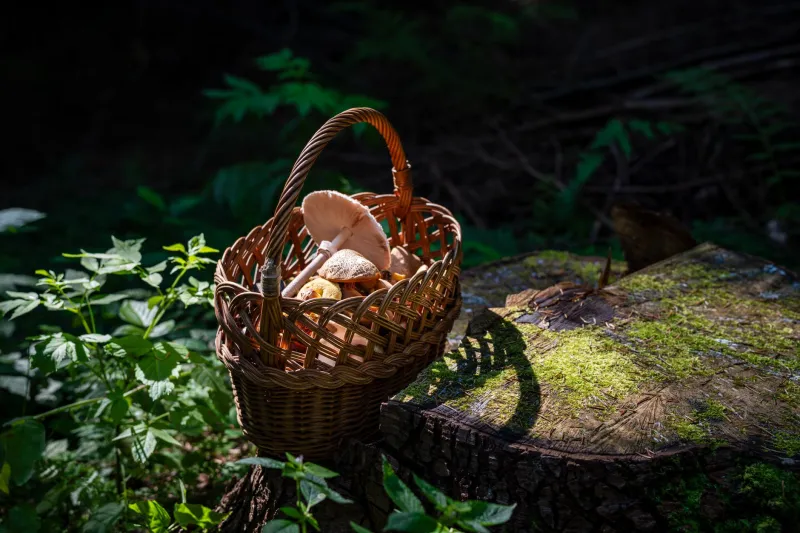
Somewhere in a damp Oregon forest in 1974, a retired schoolteacher named Mildred Kaminsky was crouched near a rotting log, carefully lifting a golden chanterelle from the moss with her bare hands. She wasn't foraging for a restaurant. She wasn't building a brand. She was doing what she'd been doing every autumn for a decade — harvesting wild mushrooms, pressing them between newspaper sheets to dry, and mailing hand-typed identification guides to anyone who wrote to her P.O. box.
Mildred is a composite of dozens of people who actually existed. And their story — quiet, unglamorous, and almost completely overlooked — turns out to be the origin story of what we now call the farm-to-table movement.
The Network That Didn't Have a Name
By the early 1970s, a scattered but surprisingly connected web of amateur mycologists was operating across the United States, concentrated heavily in the Pacific Northwest and the mountains of Appalachia. These weren't scientists. They were home cooks, back-to-the-landers, retired naturalists, and curious neighbors who had figured out something most Americans hadn't considered: the forest floor was a pantry, and it was open year-round.
They shared knowledge through channels that feel almost impossibly low-tech now. Mimeographed newsletters. Handwritten letters. Local mushroom clubs that met in church basements. Small-print guidebooks self-published and sold for a dollar or two at natural food co-ops. The Puget Sound Mycological Society, founded in 1964, was one of the more organized outfits, but dozens of informal regional groups operated with no real structure at all — just people who wanted to eat well and were willing to teach others how.
What made these foragers unusual wasn't just their enthusiasm. It was their philosophy. At a time when American food culture was dominated by processed convenience products and supermarket uniformity, they were insisting that the most interesting, nutritious, and flavorful food was the stuff nobody was selling you. That idea sounds commonplace now. In 1972, it was quietly radical.
Kitchen-Table Publishing and the Spread of Foraging Knowledge
The real engine of this movement was information sharing — specifically, the kind of grassroots publishing that predated the internet by about twenty years. Foraging newsletters circulated through co-ops and natural food stores with names like Spore Print and The Fungal Times (yes, those were real). They included identification tips, seasonal harvesting calendars, recipes, and letters from readers describing their own finds.
These publications did something that no glossy food magazine was doing at the time: they treated readers as participants rather than consumers. You weren't supposed to just read about morels and chanterelles — you were supposed to go find them, then write back and tell everyone what you discovered.
The guidebooks that emerged from this scene were equally scrappy and equally important. Authors like Clyde Christensen, whose 1943 guide Common Edible Mushrooms had a quiet second life in 1970s co-op circles, and later Gary Lincoff, whose National Audubon Society Field Guide to North American Mushrooms became a movement bible when it was published in 1981, gave foragers the vocabulary and confidence to move beyond basic button mushrooms.
But the real teaching happened at the kitchen table. Experienced foragers would invite newcomers on group walks, then cook what they found together. That direct, embodied transmission of knowledge — this is what a hen-of-the-woods smells like, this is how it sounds when you slice a porcini — was something no book could fully replicate.
Why This Predated Farmers Markets by Decades
Here's the part that tends to surprise people: the first modern farmers market in the United States is generally dated to 1976, when the Greenmarket in New York City opened. The farm-to-table restaurant movement didn't gain mainstream visibility until Alice Waters and Chez Panisse started getting national press in the late 1970s and early 1980s.
But the foraging networks were already operating well before any of that. They weren't waiting for a farmer to show up at a market stall or a famous chef to put wild ingredients on a menu. They were going directly to the source — the actual ground — and building food systems that bypassed commercial infrastructure entirely.
In that sense, the mushroom foragers weren't just ahead of the farm-to-table trend. They were working from a fundamentally different premise: that food sovereignty meant knowing how to feed yourself from the landscape around you, not just choosing which vendor to buy from.
The Legacy That Got Quietly Absorbed
By the 1990s, wild mushrooms started showing up in upscale grocery stores. Chefs discovered chanterelles and morels. Food writers called it a trend. The foragers who had been harvesting those same mushrooms for thirty years watched the culture catch up with them — and mostly didn't get a mention.
The contemporary foraging revival, which has exploded over the last decade through Instagram accounts, YouTube channels, and apps like iNaturalist, owes a direct debt to those 1970s kitchen-table mycologists. The philosophy is identical: know your landscape, harvest with care, share what you learn.
Somewhere in a used bookstore, there's probably a water-stained newsletter from 1977 with a recipe for chanterelle soup and a note about where to find hen-of-the-woods in the Blue Ridge. It's the founding document of a movement that never got a proper name.
And honestly? The people who wrote it probably would have preferred it that way.