The Boarding House Ladies Who Invented How America Eats — And Nobody Remembers Their Names
Every time you sit down to eat at a scheduled meal time, follow house rules about dinner conversation, or expect a balanced menu with multiple courses, you're following protocols invented by women whose names appear in no history books. For more than a century, American boarding house keepers — almost exclusively women — fed millions of workers, migrants, and city newcomers every single day, quietly establishing the social and cultural norms that still govern how Americans approach communal dining.
The Invisible Architects of American Food Culture
Between roughly 1850 and 1950, boarding houses were where America ate. Factory workers, railroad employees, traveling salesmen, new immigrants, young people seeking opportunity in growing cities — all relied on boarding house meals as their primary source of daily nutrition. The women who ran these establishments weren't just providing food; they were creating the social infrastructure that taught millions of Americans how to eat together.
These landladies operated complex food operations that would challenge modern restaurant managers. They planned menus, purchased ingredients, supervised cooking, served meals, and managed the social dynamics of communal dining — all while maintaining household economies that operated on razor-thin margins.
Yet food historians have largely ignored their massive influence on American eating habits, focusing instead on famous chefs, cookbook authors, and restaurant pioneers. The boarding house keepers remain invisible, despite the fact that they probably shaped American food culture more than any other single group.
Creating the American Meal Schedule
Before boarding houses standardized eating patterns, American meal times varied widely by region, occupation, and social class. Rural families ate when farm work allowed. Urban workers grabbed food when they could afford it. There was no universal expectation of "breakfast at 7, dinner at 6."
Boarding house keepers changed all that out of practical necessity. Feeding 20-40 people required strict scheduling. Meals had to be prepared, served, and cleaned up efficiently to make the economics work. More importantly, boarders needed to know when food would be available so they could plan their work schedules around meal times.
The landladies established the three-meal system that became standard American practice: substantial breakfast before work, midday dinner (the main meal), and lighter supper in the evening. They set specific serving times and enforced them rigorously. Miss your meal time, and you went hungry — or paid extra for special service.
This rigid scheduling gradually spread beyond boarding houses as workers carried these expectations into their own households and other dining situations. The American expectation of predictable, scheduled meals traces directly back to boarding house discipline.
Inventing the Set Menu System
Modern Americans take menu variety for granted, but boarding house keepers pioneered the concept of offering multiple dishes at every meal. Unlike restaurants that served whatever the cook felt like making, or families that ate the same foods repeatedly, boarding houses needed to satisfy diverse tastes while controlling costs.
The solution was the set menu system: a rotation of dishes that provided variety over time while allowing efficient bulk purchasing and preparation. Monday might be beef stew and cornbread, Tuesday chicken and dumplings, Wednesday pork and beans. Boarders knew what to expect, but didn't get bored eating the same thing every day.
This system required sophisticated planning skills. Landladies had to balance nutrition, cost, seasonal availability, cooking time, and boarder preferences while ensuring leftovers could be incorporated into subsequent meals. Many developed signature menu cycles that became selling points for their establishments.
The set menu concept eventually influenced restaurant chains, institutional food service, and even family meal planning. The idea that meals should offer variety within predictable patterns became deeply embedded in American food culture.
Establishing Dining Room Democracy
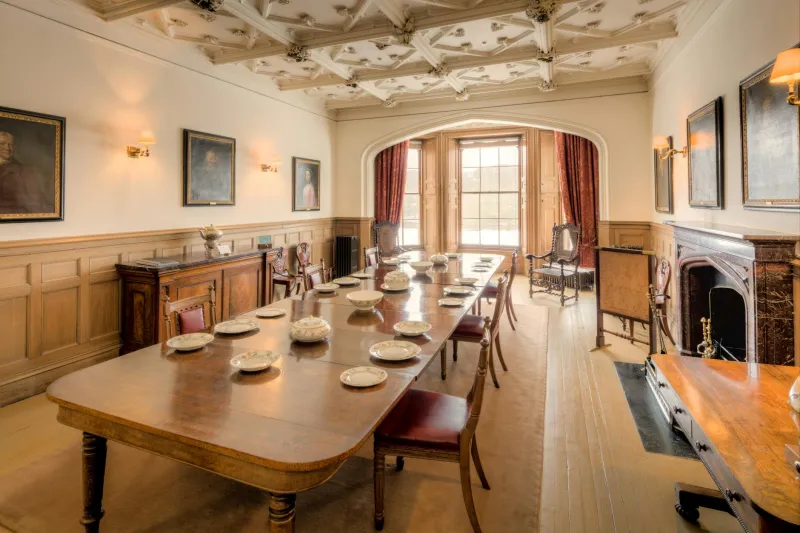
Boarding house dining rooms were among the first places in America where people from different social classes, ethnic backgrounds, and occupations regularly ate together. Landladies had to create social rules that allowed these diverse groups to share meals peacefully.
The solutions they developed became the foundation of American communal dining etiquette. Conversation should be pleasant but not controversial. Everyone waits for others to be served before eating. Reach for food politely, don't grab. Clean your plate but don't ask for seconds until others have been served.
These weren't formal etiquette rules from upper-class society — they were practical guidelines for making communal meals work among strangers. The landladies enforced these standards because their businesses depended on maintaining harmony among boarders who might otherwise clash.
Many boarding houses became informal schools for social mobility, teaching recent immigrants and rural migrants the dining behaviors expected in American cities. The landladies served as cultural instructors, demonstrating through daily practice how Americans were supposed to eat together.
The Economics of Feeding America
Running a boarding house required business skills that would impress modern entrepreneurs. Landladies had to calculate food costs down to the penny, manage inventory without refrigeration, supervise staff, maintain buildings, collect rent, and handle difficult customers — all while ensuring that meals appeared on time every single day.
Most operated on extremely tight margins, making money through volume and efficiency rather than high prices. They bought ingredients in bulk, used every scrap of food, and developed cooking techniques that maximized nutrition while minimizing cost. Many became expert negotiators, developing relationships with local farmers, butchers, and grocers to secure better prices.
The financial pressure meant constant innovation. Landladies who survived in the business became masters of stretching ingredients, creating satisfying meals from inexpensive components, and managing food waste. These skills influenced American home cooking as former boarders applied lessons learned at boarding house tables in their own kitchens.
The Social Laboratory of American Dining
Boarding houses served as testing grounds for social changes that would reshape American society. As women entered the workforce in larger numbers, boarding houses provided models for how working women could eat away from home. As immigration increased, they became spaces where different ethnic groups encountered each other's food traditions.
The landladies navigated these social changes while maintaining their businesses. They decided which ethnic foods to incorporate into their menus, how to handle religious dietary restrictions, and whether to allow women and men to eat together. Their decisions influenced broader American attitudes about food diversity and social mixing.
Many boarding houses became informal community centers where boarders met future spouses, business partners, and lifelong friends. The landladies often served as matchmakers, mediators, and counselors, shaping the social lives of the people they fed.
Why History Forgot Them
Despite their enormous influence, boarding house keepers disappeared from historical memory for several reasons. Most were women working in domestic settings, which historians traditionally overlooked. They left few written records compared to male business owners or public figures.
More importantly, their work seemed ordinary rather than revolutionary. They were just feeding people, using skills that women were expected to possess naturally. The fact that they were simultaneously running businesses, teaching social skills, and shaping cultural norms wasn't recognized as historically significant.
As boarding houses declined after World War II, replaced by apartments, restaurants, and corporate food service, the women who had run them scattered into other occupations or retirement. Their knowledge and innovations were absorbed into American culture without acknowledgment of their source.
The Lasting Legacy
Walk into any American restaurant, cafeteria, or family dining room today, and you'll encounter systems pioneered by boarding house keepers. The expectation of varied menus, scheduled meal times, and orderly communal dining all trace back to their innovations.
Modern food service operations use planning and cost-control techniques developed by landladies working with much more primitive equipment and smaller margins. The social rules that govern American dining behavior were largely codified in boarding house dining rooms.
Most importantly, these forgotten women demonstrated that feeding people well is both an economic and social achievement requiring sophisticated skills. They proved that food service could be profitable while remaining humane, efficient while preserving dignity.
The next time you sit down to a scheduled meal with multiple courses and polite conversation, remember that you're participating in traditions created by women whose names we've forgotten but whose influence surrounds us every time we eat together. They taught America how to dine, and we're still following their rules.