The Secret Sauce Packets That Told Your Chinese Restaurant's Real Story

The Little Packets That Packed Big Stories
Open any Chinese takeout container today, and you'll probably find the same predictable lineup: a few soy sauce packets, maybe some sweet and sour sauce, and if you're lucky, a packet of hot mustard that could clear your sinuses from three counties away. But rewind thirty years, and those white paper containers told a completely different story.
Back then, every Chinese-American restaurant had its own arsenal of house-made condiment packets. Walk into Golden Dragon in Cleveland, and you'd get their grandmother's plum sauce recipe — thick, molasses-dark, with hints of star anise. Drive down to Birmingham, and the same dish would come with a completely different plum sauce, this one bright and tangy with a mysterious heat that lingered on your tongue.
 Photo: Golden Dragon, via wallpapers.com
When Every Restaurant Was Its Own Sauce Empire
These weren't mass-produced condiments shipped from some factory in New Jersey. Restaurant families were mixing their own duck sauce in five-gallon buckets, grinding their own hot mustard powder, and creating plum sauce variations that reflected not just Chinese traditions, but the local ingredients they could source in their adopted American towns.
The Chen family in Portland might add local pears to their duck sauce, while the Wongs in Houston incorporated a touch of molasses they discovered at a nearby barbecue joint. Each packet was a tiny ambassador for that family's journey — where they came from in China, where they landed in America, and what they learned along the way.
The Geography of Flavor
What most customers never realized was that these sauce variations created an invisible map of Chinese-American immigration patterns. The sweet-heavy sauces popular in the Northeast reflected the tastes of families who'd settled near sugar refineries and maple syrup producers. The spicier variants found in the Southwest showed the influence of Mexican chili culture on Chinese immigrants who'd worked their way up from the border.
Even the mustard told stories. New York-area restaurants often served a yellow mustard blend that incorporated local deli traditions, while West Coast establishments leaned toward a cleaner, more traditional Chinese preparation that stayed closer to Guangdong province recipes.
The Great Standardization
Sometime in the 1990s, the magic started disappearing. Restaurant supply companies began offering pre-made sauce packets that promised consistency and cost savings. Why spend hours every week mixing duck sauce when you could order cases of identical packets that would taste the same whether your customer was in Maine or Montana?
The business logic was sound, but something irreplaceable was lost in translation. Those mass-produced packets might have been reliable, but they were also anonymous. They told no stories, carried no family history, and revealed nothing about the hands that made your food.
The Holdouts
But here's the thing that gives food lovers hope: not everyone gave in. Scattered across America, a handful of family-run Chinese restaurants still make their own condiment packets. These aren't tourist destinations or Instagram-famous spots — they're the neighborhood joints that have been feeding the same families for thirty years.
At New China Garden in a strip mall outside Akron, Mrs. Liu still mixes her plum sauce every Tuesday morning, using a recipe that incorporates Ohio apples and a touch of local honey. The packets aren't pretty — they're hand-labeled with a pricing gun and sealed with a machine that's older than most college students — but that sauce carries flavors you literally cannot get anywhere else.
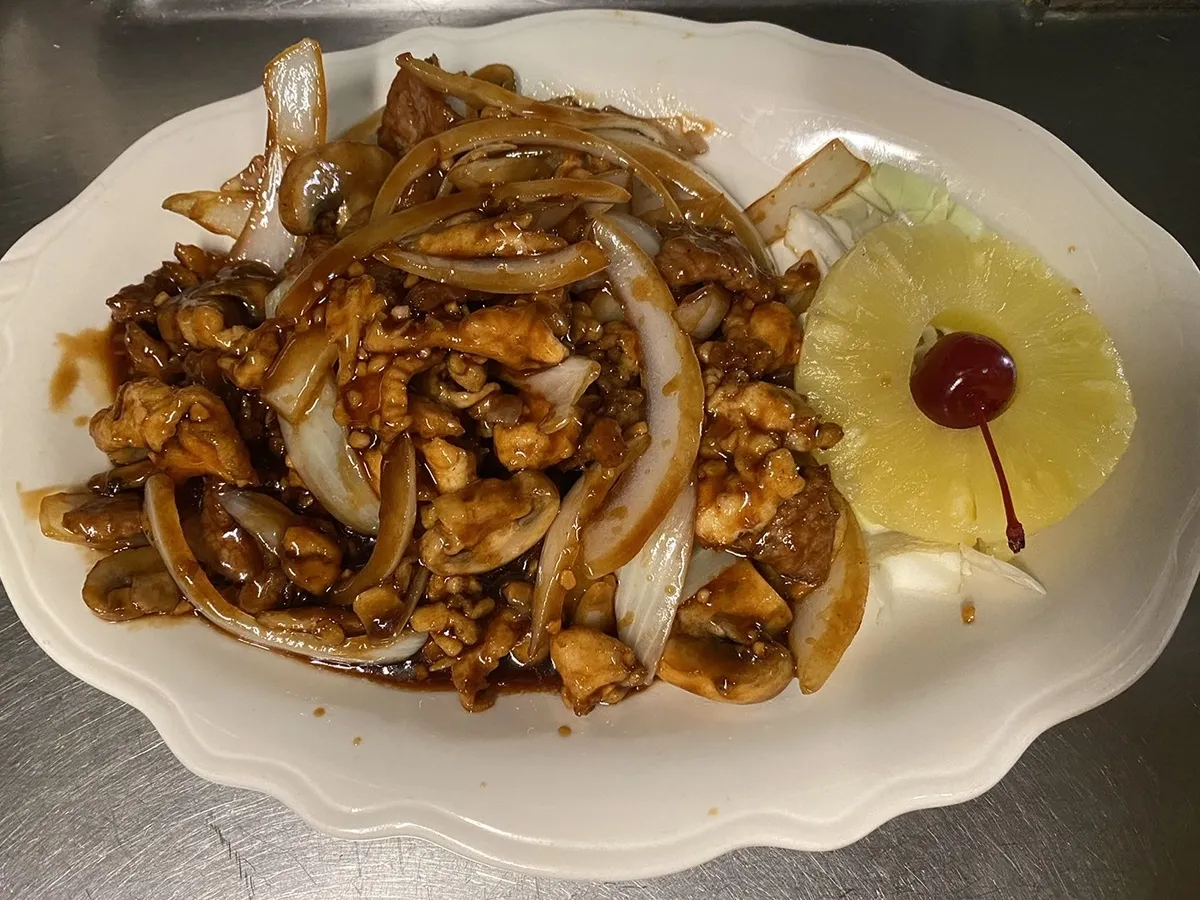 Photo: New China Garden, via website-cdn.menusifu.com
What We Lost When Convenience Won
The disappearance of house-made sauce packets represents something bigger than just condiments. It's a story about how standardization, for all its benefits, can erase the beautiful chaos that happens when cultures collide and adapt.
Those old sauce packets were edible proof that American Chinese food wasn't just Chinese food made in America — it was something entirely new, created by families who were simultaneously honoring their heritage and inventing their future. Every packet was a small act of cultural translation, turning unfamiliar flavors into something that felt both exotic and comforting to American palates.
Finding the Last of the Real Thing
If you want to experience what Chinese takeout sauce packets used to be like, your best bet isn't Yelp or Google Maps. Ask older customers at your local Chinese restaurant if they remember when the sauces "tasted different." Follow up on those leads. The restaurants that still make their own condiments rarely advertise the fact — it's just something they've always done.
These sauce packets might seem like a small thing, but they're actually windows into one of America's great ongoing stories: how immigrant families have continuously reinvented both their own traditions and American food culture, one small innovation at a time. The next time you tear open a generic duck sauce packet, remember that it used to be somebody's signature, somebody's secret, somebody's small way of saying "this is who we are."